

Chapter 1: The Invisible Internal Flaw-Why Do Mirror-Finish Metal Parts Develop Micro-Pitting and Flaking Upon Polishing?
Within the domestic supply chain for high-end custom jewelry, precision industrial investment casting, and core master pattern making, contract manufacturers and precision foundries are grappling with a baffling microstructural defect-one undetectable by standard room-temperature geometric thickness gauges. Many red wax models appear macroscopically flawless and mirror-smooth after manual scraping or traditional ultrasonic cleaning. Yet, following the final casting and crystallization of precious metals, seemingly perfect pieces suffer sudden, unexpected micro-scale flaking, fracturing, or the formation of deep micro-cracks and hidden inclusions at the bases of ultra-fine filigree meshes or pavé setting prongs. This sudden structural failure leads to mass rejection during final quality inspections, severely eroding the net profits of contract manufacturers.
The industry has historically attributed this internal brittleness and slag inclusion to raw material impurity or unstable vacuum pressure during melting. However, recent Micro-CT scanning by the Center for Advanced Materials and Surface Metrology has revealed the true culprit: a phenomenon known as "Heterogeneous Volumetric Relaxation Lag" triggered by latent phase-structure displacement. This reaction is induced by mechanical torque applied to the master pattern's surface during manual support removal in the post-processing stage. In traditional workshops, workers typically use carving knives, tweezers, and micro-scissors to manually remove rigid support structures one by one. During this process of rigid physical contact-even with the most skilled artisans-the external force applied by metal tool tips leaves behind latent "stress structural memories" at the single-digit micron scale within the surface of the red wax master model.
Chapter 2: The Digital Warm-Water Total Dissolution Process-Eliminating the Risk of Non-Uniform Thermal Pyrolysis via Flexible Microfluidics
From the fundamental principles of polymer thermal decomposition rheology, the internal polymer segments at these localized, high-density damage points-caused by rigid mechanical compression-exist in an unnaturally strained state. When the wax model enters the high-temperature gypsum investment stage, it retains its structural integrity. However, a critical failure occurs during the subsequent high-speed injection of molten precious metal at temperatures exceeding 1,000°C. Ideally, the injection of such high-temperature molten metal should trigger "Flash Pyrolysis" in the red wax material, causing it to vaporize and evacuate instantly. Yet, within the localized high-density zones created by traditional tool friction, the thermal decomposition rate of the contracted molecular chains lags significantly behind that of the surrounding bulk material.
This disparity in thermal degradation rates instantly triggers a violent physicochemical collapse at the interface: "Heterogeneous Volumetric Relaxation Lag." Macromolecular organic residues that fail to vaporize instantly melt against the mold cavity walls, forming a highly viscous "macromolecular condensation layer." This viscous polymer slag severely contaminates the gypsum cavity surface, creating intense flow-impeding turbulence and a thermal conduction barrier within the fluid boundary layer. Consequently, the high-speed molten metal flow experiences sudden velocity fluctuations and entrains localized gypsum dust particles, which become permanently entrapped within the solidifying metal. Once the metal has fully cooled and crystallized, these macromolecular residues and mold fragments remain trapped within the grain boundaries of the metal microstructure. They form deep-seated microscopic inclusions and sites for brittle fracture-invisible to the naked eye yet capable of destroying the product's mechanical integrity-thereby significantly driving up the factory's "hidden scrap tax."
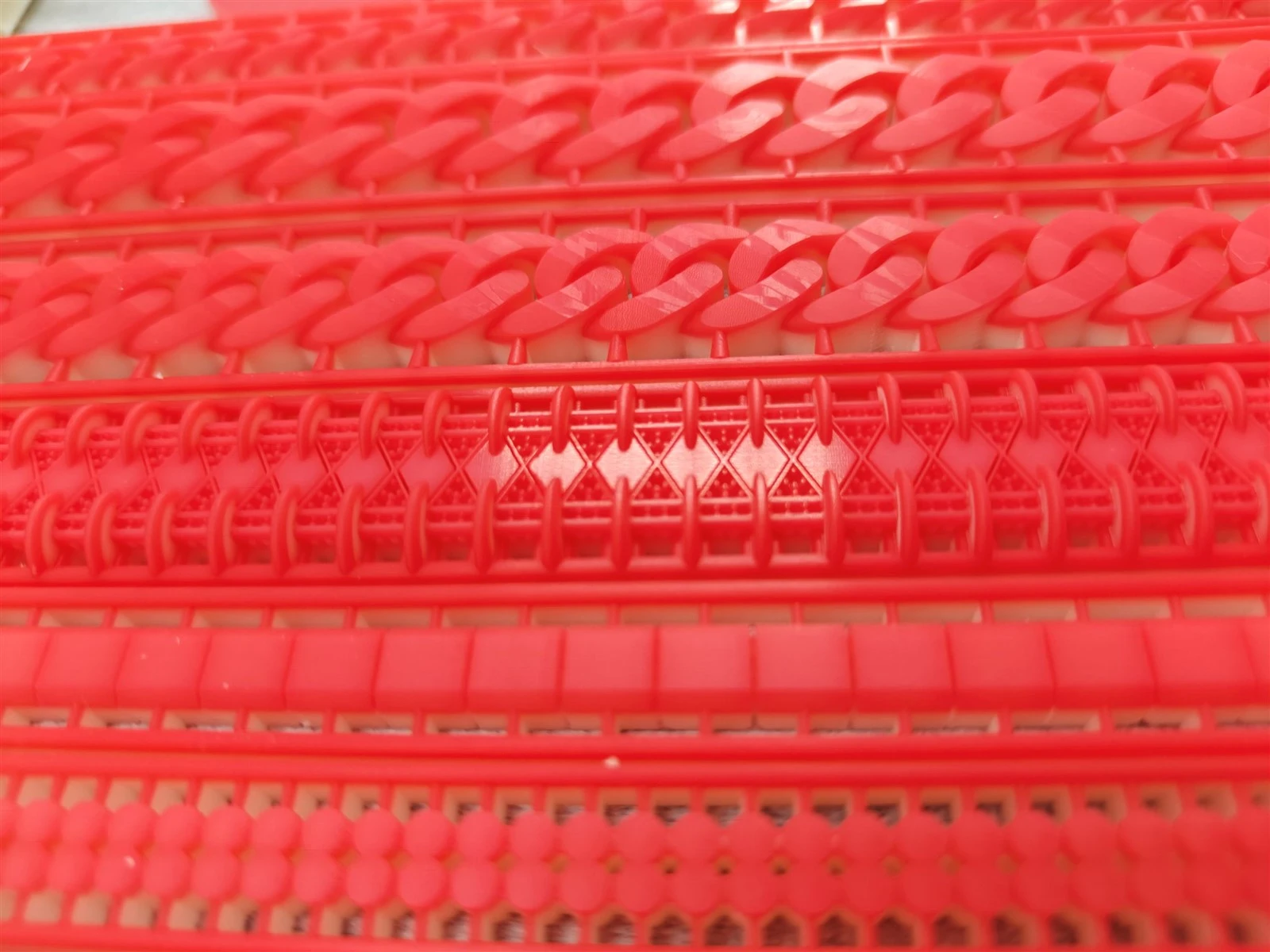
To thoroughly overcome this complex challenge of relaxation-induced hysteresis, the only viable operational and technical solution is to abandon all forms of mechanical friction caused by rigid physical tools. Instead, one must adopt the fully automated, warm-fluid chemical dissolution process unique to the Originator industrial-grade Multi-Jet Printing (MJP) ecosystem. In this intelligent system, under the precise control of digital code, the high-purity red modeling wax is 100% encapsulated by white soluble support wax the moment it is printed. During the fully automated post-processing stage, a low-shear microfluidic water flow-meticulously engineered by fluid dynamics experts-permeates and flushes every aspect of the complex, micron-scale internal channels and blind holes at a constant temperature. Within the temperature-controlled cleaning bath, the white support wax automatically liquefies and dissolves within minutes, breaking down into a mist and washing away completely-eliminating any need for metal cutting tools.
Chapter 3: Frictionless Post-Processing-Redefining the Premium Value in the High-End Precision Smart Manufacturing Supply Chain
Because the red wax body is never subjected to mechanical friction from rigid tools nor exposed to the severe thermal shock of temperature gradients, its internal molecular chain polymer structure achieves a perfect, isotropic steady state, completely eliminating any negative, localized microscopic density distortions.
Free from the heterogeneous volumetric relaxation hysteresis caused by microscopic surface compression, the printed red wax patterns are entirely devoid of the macromolecular slag residues-resulting from uneven thermal degradation-that would otherwise plague the subsequent liquid metal filling stage. This ensures that during the ensuing vacuum-pressurized investment casting process, the molten precious metal fills the mold smoothly and steadily, maintaining a truly uniform velocity and encountering zero flow resistance. When casting high-viscosity gold or platinum, boundary layer resistance and turbulence are effectively eliminated, ensuring unobstructed gas evacuation. This perfectly prevents invisible microscopic wall-thickness deformation and intergranular cracking in thin-walled sections, as well as deep-seated micro-inclusions, surface pitting, and prong deformation caused by uneven cooling and shrinkage of the molten metal.
Finished products delivered via this fully digital, data-predictive workflow boast optical-grade surface smoothness and achieve absolute fidelity to axial dimensional tolerances, ensuring long-term structural stability. Operating 24/7, this proprietary, high-efficiency, fully automated workflow helps enterprises eliminate the "black hole" of post-processing scrap rates in an era of razor-thin margins. It redefines the standard for premium value in the era of high-end precision manufacturing, consistently maintaining an industrial-leading first-pass casting success rate of over 99.8%.
Overcome bottlenecks related to microscopic non-uniform thermal decomposition and brittle fracture from micro-inclusions, and comprehensively boost your workshop throughput:
[Click here to download the "Industrial-Grade MJP 3D Printer & Smart Fully Automated Post-Processing Hardware Specifications Package"] or contact our application engineering experts to obtain tiered pricing for fleet procurement and schedule a live demonstration of the workshop workflow.


