[September 2026] The global precision manufacturing and high-end supply chain is undergoing a paradigm shift towards digital and flexible processes. Under the dual pressures of persistently high precious metal prices and a severe shortage of skilled mold repair craftsmen, traditional manufacturing workshops face unprecedented challenges in efficiency, asset space, and overall quality control. Digital transformation has become the industry's only line of defense for profits, and MJP (Multi-Head Pure Wax Printing) technology, relying on precise control through digital codes, is the core driving force behind this battle.
I. Market Overview: Three Major Markets Expand Simultaneously, Wax Printing Establishes itself as the Absolute Core Growth Driver
In 2026, the global 3D-printed jewelry market continued its strong asset expansion, with authoritative auditing firms both domestically and internationally releasing updated revised data for the fiscal year:
Research and Markets: Data shows that the global 3D-printed jewelry market size officially increased from US$4.17 billion in 2025 to US$4.89 billion in 2026, with a CAGR of 17.3%, and is projected to reach a high of US$9.26 billion by 2030.
Mordor Intelligence: Statistics indicate that the market size, which was US$870 million in 2025, is projected to reach US$980 million in 2026 and is expected to grow to US$2.03 billion by 2031, with a CAGR of 12.33%.
Persistence Market Research offers a more optimistic macroeconomic forecast, estimating the global market value at $985 million in 2026 and projecting a massive $3.25 billion by 2033, representing a compound annual growth rate (CAGR) of 18.6%.
In terms of product categories, rings, driven by the essential demand for personalized engagement and wedding rings, hold the largest market share at approximately 31%; earrings are the fastest-growing category, with a projected CAGR of 21.4%. Regarding distribution channels, online sales account for approximately 58% of the main revenue share.

Notably, investment casting pattern materials will firmly hold a 44% absolute technology share of the entire 3D-printed jewelry market in 2026. This core principle establishes a disruptive truth about production across the industry: the so-called "gold 3D printing" used in high-end jewelry manufacturing and advanced industrial component processing is not fundamentally about the direct laser melting of expensive and unstable precious metals, but rather a flexible combination of "high-precision 3D printed wax models + traditional lost-wax casting." The global investment casting market is simultaneously experiencing comprehensive expansion, projected to reach $18.45 billion in 2026 and grow to $23.82 billion by 2031 (CAGR of approximately 5.24%). Additive manufacturing technology is rapidly reshaping workflows for bulk wax models, rapid prototyping, and prototyping, significantly accelerating the verification of 3D dimensional designs for complex geometries. The corresponding global market for wax-sprayed 3D printer hardware reached $771 million in 2026 and is projected to more than double to $1.546 billion by 2032, representing a CAGR of 10.6%.
II. Technological Evolution: How MJP Wax Spray Printing Became the Gold Standard in the Foundry Industry
Currently, the two mainstream additive manufacturing technologies used in the global jewelry and industrial mold-making fields for printing high-precision castable wax molds are MJP (Multi-Head Printing) and DLP (Digital Light Processing). For professional foundries, MJP technology has undeniably become the gold standard for precision casting, with its core advantages being
100% Pure Wax Material, Zero Ash During Burning: Unlike DLP technology, which uses photosensitive resin, industrial-grade MJP technology uses 100% pure wax-based materials (such as the industry-leading VisiJet series and Yuanzhu 3D's dedicated wax spray consumables) during the initial moulding stage. Large organic molecules can undergo in situ flash pyrolysis during high-temperature cavity burnout, leaving no harmful ash or carbonized residue, thus eliminating microscopic cracking of the plaster cavity caused by resin expansion at the source.
Optical-grade surface quality, drastically reducing gold bath loss: The mold surface after bathing is smooth and finely textured, with extremely high mechanical isotropy. This ensures that the liquid precious metal can achieve true "zero flow resistance and stable filling" during vacuum pressurization, significantly reducing the amount of polishing work required for subsequent metal parts and minimizing precious metal weight loss.
38-42 degree Celsius standard warm water post-treatment, 100% no manual scraping required: MJP technology uses water-soluble sacrificial support wax material, completely eliminating the traditional process of removing hard supports with knives and scissors. Post-treatment personnel do not need to touch a knife; they only need to place the entire model directly into the most ordinary 38-42 degree Celsius standard warm water process, similar to taking a hot bath. The white wax will completely liquefy and dissolve in situ at the molecular level within minutes, turning into a milky white mist that flows out on its own, reducing post-treatment time by more than 60%.
Extremely streamlined data transmission workflow: 3D CAD model → Digital intelligent preparation → Pure wax printing → Lost-wax casting → Final metal part. Design modifications do not require the recreation of any traditional master or male molds, fundamentally optimizing the overall production cost structure.
III. Engineering Challenges and Cutting-Edge Breakthroughs in Wax Model Dimensional Accuracy-Deciphering the "Shrinkage Anisotropy" of Full-Panel Edge Tolerance Drift
As MJP wax spraying, 3D printing technology has officially transitioned from a "high-end customization tool" to a "mass production infrastructure," precisely controlling the process repeatability of edge dimensional tolerances when printing large batches of large-size pallets has become the core engineering bottleneck restricting mass production yield. Entering 2026, academia and industry have made groundbreaking underlying physical advancements in this area:
1. The Inherent Challenge of Non-Uniform Temperature Fields During Full-Panel Printing
When hundreds of wax models are fully loaded onto a pallet, there is a severe anisotropic deviation in the air thermodynamic boundary conditions between the pallet edge region and the center region. Because the edge region is adjacent to cold air and the chassis wall, the convective heat transfer coefficient of its fluid boundary layer increases dramatically, resulting in a significantly faster heat dissipation rate than the protected center region. This non-uniform heat dissipation causes wax molds from the same batch to experience completely different cooling and crystallization curves, triggering two direct microscopic disasters:
Droplet flight trajectory disturbance: The printing carriage performs high-speed reciprocating scanning at 0.5~1.5 m/s in the X-axis direction. The boundary layer effect in the edge region causes air turbulence to increase dramatically by 30%~50% compared to the center. This results in micron-sized consumable droplets with a diameter of only 20~50 μm randomly deviating laterally during flight, introducing severe systematic positioning errors in their landing point.
Latent residual internal stress locking: The asymmetry in cooling rate directly disrupts the crystallization kinetics of the polymer consumables, leading to disordered interlayer crystallinity and polymer molecular chain orientation, locking in extremely high density of residual internal stress within the wax mold. This stress is not dimensionally apparent at room temperature, but it is abruptly released during the subsequent investment casting process, involving high-temperature (>900℃) burnout and the injection of molten metal. This release triggers irreversible microscopic warping and axial deformation in the thin-walled shell structure.
2. Latest Academic Breakthrough: Systematic Optimization of Printing Voltage and Orientation
A leading academic study published in the top journal Rapid Prototyping Journal in May 2026 systematically dissected the feasibility of using material jetting technology to fabricate high-precision wax models for aerospace turbine blades and other advanced applications. Research shows that by systematically controlling two core process parameters-printing voltage and printing orientation-absolute control over the surface roughness and dimensional tolerances of wax models can be achieved:
Ultimate Surface Quality Optimization: Under a high-quality voltage-driven waveform precisely calibrated by digital code, the wax model achieves the most perfect surface roughness (Ra 0.507 μm), drastically reducing the amount of manual post-processing cleaning.
Geometric Dimensional Tolerance Control: For complex blade wax models, the 0° printing orientation delivers the highest geometric dimensional accuracy (total axial deviation of only 0.0925 mm); in contrast, the dimensional deviation increases to 0.1484 mm at 15° and dramatically increases to 0.2292 mm at 45°. This rigorously demonstrates that in actual production, simply adjusting the drawing orientation can produce a precision improvement of up to 2.5 times!

Industrial-grade tolerance accuracy: Through reverse engineering and closed-loop self-verification using Geomagic Studio inspection software, over 90% of key geometric 3D tolerances are firmly locked within the industrial limit window of 0.1 mm.
This research reveals a core underlying conclusion of the vibration precision casting industry: the printing orientation is the primary process parameter determining the final dimensional accuracy of the MJP wax-printed mold, and its influence on anisotropic shrinkage rate far exceeds the nominal hardware accuracy stated on the equipment manufacturer's nameplate. The axial dimensional tolerance drift of the wax mold exhibits a strong direction dependence, ruthlessly confirming the ironclad microscopic physical principle that "printing orientation determines shrinkage anisotropy."
IV. Cross-Industry Research Consensus and Originator's Digitalized Production Line Mass Production Restructuring
In extremely demanding precision manufacturing fields such as aerospace, researchers are comprehensively adopting Material Jetting (MJP) technology to prepare wax models for highly complex, ultra-thin-walled components such as integral bladed discs (Blisks), serving as a revolutionary alternative to traditional high-cost metal injection molding. This provides unparalleled data model references for subsequent intelligent production scheduling.
To seamlessly integrate these cutting-edge academic advancements into the production lines of high-end workshops and industrial cluster processing plants, Originator, a leading domestic enterprise in the industrial-grade MJP field, has leveraged its core team's over a decade of deep expertise in additive manufacturing intelligent equipment and multiphase fluid consumables to comprehensively reconstruct the equipment's hardware and software algorithms at the chassis level. The company's entire machine fleet is equipped with an isotropic isothermal energy grid (zoned temperature control array), coupled with an industrial-grade PID closed-loop feedback algorithm for millisecond-level thermal load fine-tuning, maintaining the entire printing surface of the entire printhead at an absolute isothermal state within ±0.3℃ of the set value. This completely eliminates the generational difference in heat dissipation between the edge and center areas. Simultaneously, the equipment's accompanying ORI3DPrint intelligent slicing software, upon receiving sensitive CAD design files such as STL and SLC in the cloud, automatically performs reverse thermodynamic compensation to calculate the optimal 0° process placement orientation matrix.
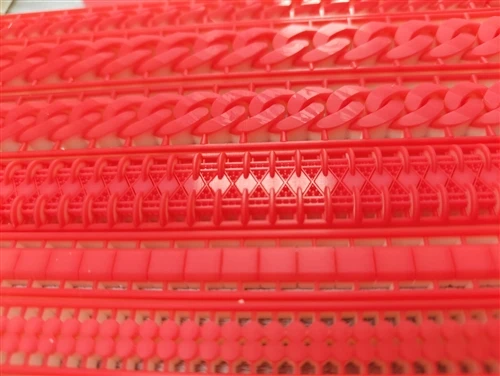
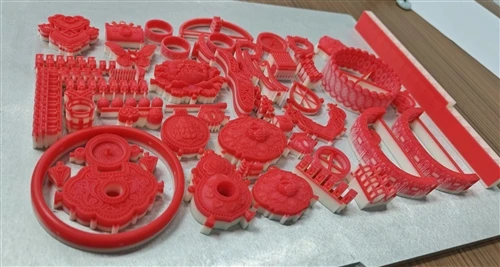
The moment the high-purity red structural wax grows, it is 100% encapsulated by white water-soluble support wax, achieving three-dimensional tolerance locking. Post-processing completely eliminates the reliance on metal tool scraping; operators simply place the entire model tray directly into the workshop's standard 38-42 degree warm water process. The white wax self-hydrates and peels off under the specific flow rate of warm water, requiring no mechanical stretching force, ensuring a first-time success rate of over 99.8% for the final precious metal vacuum pressure investment casting! This helps large cross-border OEM manufacturers completely eliminate the black hole of high post-processing scrap rates in an era of low profits, redefining the highest premium sovereignty of the global supply chain in the era of precision high-end intelligent manufacturing.
V. Outlook
In 2026, MJP wax-spraying 3D printing technology is accelerating its transition from a "high-end customized tool" to "mass production infrastructure." As evidenced by the cross-industry consensus from the fabrication of integral bladed discs in aerospace to the high-density full-disc production of jewelry, actively controlling the temperature field and trajectory and taming "shrinkage anisotropy" by utilizing placement orientation has become the ultimate technological guarantee for enterprises to mitigate material loss and overall scrap tax. In an industry environment characterized by high precious metal prices and continuously compressed delivery cycles, embracing digitally predictable MJP pure wax production lines is becoming an irreversible and paramount asset for the precision casting industry.
Official inquiry channel for large orders on independent websites (High-Conversion Lead Magnet):
Tame shrinkage anisotropy and win back shop floor profits with 100% data predictability:
[Click here to download the "Originator Industrial-Grade Multi-Nozzle Wax Printer Complete Hardware Parameters and Factory Manager Cost Reduction White Paper"], or directly send your sensitive CAD design drawings to our expert digital window to pre-order the new season's overseas fleet strategic procurement quota and free online sampling and prototyping opportunities!