- Originator 3D (ORI 053) Technical Insight: Addressing Full-Tray Consistency Challenges through the Lens of Inkjet Deposition Fluid Dynamics
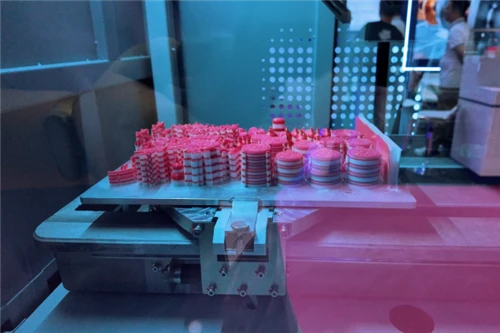
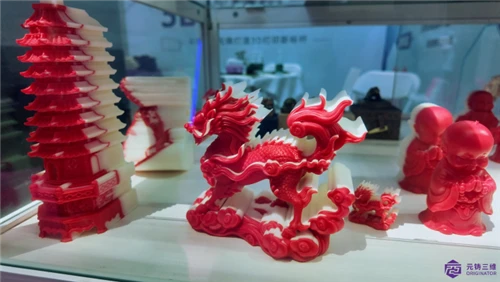
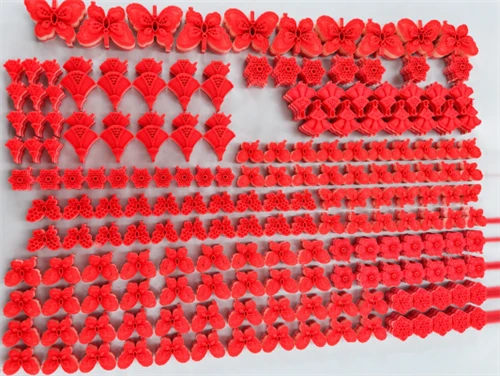
Hangzhou, China - September 21, 2026 - As generative AI-designed structures-such as multi-dimensional interlaced hollow channels, ultra-thin curved surfaces, and micro-prong settings-become mainstream in precision casting orders, the demand for dimensional repeatability in full-tray mass production has reached the micron-level limit. Particularly in high-end custom jewelry, precision parts contract manufacturing, and master pattern making, the ability of hundreds or thousands of models on a single tray to maintain absolute consistency across all axes directly determines the final casting yield and the enterprise's overall profitability.
High-precision metrology scanning reveals that the root cause of final dimensional deviations in the edge zones during mass-scale precision casting (e.g., the proportion of parts exceeding ±0.05 mm deviation post-casting) often lies not in the cooling shrinkage during the subsequent metal pouring stage, but in systemic positioning errors triggered by "Droplet Flight Trajectory Perturbation" during the initial inkjet deposition and forming phase.
I. Real-Time Drop Placement Compensation Algorithm: Mitigating Systemic Aerodynamic Errors through Active Control
From the perspective of the physics of polymer inkjet deposition, industrial-grade Multi-Jet Printing (MJP) with pure wax relies on the precise positioning and stacking of hundreds of thousands of micron-scale polymer droplets onto a build tray. In actual production, the print carriage of industrial MJP equipment executes high-speed reciprocating scans along the X-axis (typically at speeds of 0.5–1.5 m/s), driving the surrounding air to form unsteady airflow. Due to their proximity to the boundaries, the edge zones of the print tray are subjected to the combined impact of boundary layer effects and recirculating airflow from the machine's inner walls; consequently, the magnitude of airflow disturbance is significantly greater there than in the central zone. This phenomenon causes random lateral displacement of high-purity, micron-scale droplets (diameters of only 20–50 μm) while in flight, leading to the degradation of the part's microstructural geometry before curing occurs.
To address these aerodynamic issues, simply slowing down print speeds or reducing the active build area would severely impact the workshop's production capacity and net profit. In response, the Originator R&D center implemented a robust, real-time droplet placement compensation algorithm on its flagship mass-production model-the ORI 053 industrial-grade, triple-printhead pure wax printer.
Leveraging real-time raster coordinate feedback from the printhead carriage, the system dynamically adjusts the jetting voltage and drive waveform for each piezoelectric nozzle at the microsecond level. Compensation values are calculated online using a pre-calibrated spatial mapping matrix (correlating droplet deviation with position) and applied dynamically during high-speed scanning. This digital trajectory correction technology significantly mitigates droplet trajectory deviations caused by air turbulence, strictly maintaining placement accuracy across all coordinates within ±0.02 mm and eliminating latent sources of systematic error at the physical source.
II. Extreme-Performance Mass Production, Surface Precision, and Data Security

Through active control involving the synergistic regulation of jetting parameters and thermal fields, the Originator ORI 053 delivers stable, repeatable precision manufacturing solutions for multinational processing plants and high-end jewelry workshops:
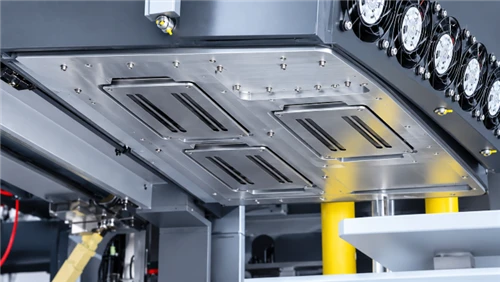
Alignment to Spatial Tolerance Limits: Within a 290 × 207 × 138 mm build volume and at an ultra-high resolution of 2,900 × 2,900 × 1,700 DPI, the system limits micro-dimensional deviation between the build tray's edge and center zones to within 0.005 mm. Combined with a zonal temperature control array, the platform's thermal field is maintained within ±0.3°C of the setpoint, ensuring consistent interlayer isotropy for the entire batch of red wax parts.
Originator 3D delivers stable, scalable precision manufacturing solutions to multinational processing plants and high-end jewelry workshops through a cost-effective, pure-wax printing workflow.
III. Free Prototyping & Industry Partnership Channels
Originator 3D has opened a global channel for free bulk prototyping validation, catering to precision casting manufacturers, mold-making enterprises, and high-end jewelry workshops. This allows businesses to use actual samples to precisely evaluate edge tolerances and surface quality across the entire build plate.
One-on-One Free Prototyping Service (Send CAD Files to HQ for Standard Warm-Water Dissolution):
Master shrinkage anisotropy and reclaim workshop net profits with 100% data predictability: [Click here to add Anny, Originator 3D's top international sales representative, on WeChat (wells@originator3d.net)]. Factories and studios requiring mass-production consistency validation are invited to send sensitive 3D CAD designs directly to our expert digital portal. Our headquarters will immediately schedule high-speed printing on the new ORI 053 machine and complete post-processing using the standard 38–42°C warm-water dissolution method. We provide complimentary red wax pattern printing services. While we cover all material costs and process orders rapidly based on the queue, shipping fees for the finished prototypes are not included. Let the physical product shatter any concerns you may have about quality!
Media Contact & Corporate Gateway
Official Issuer: Originator 3D Global Application Engineering and Cross-Border Compliance Audit Center