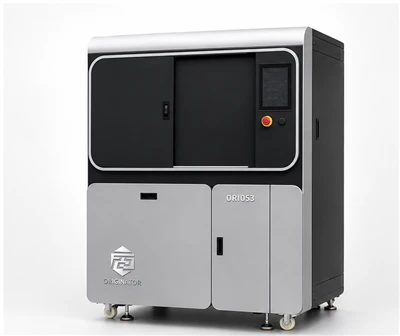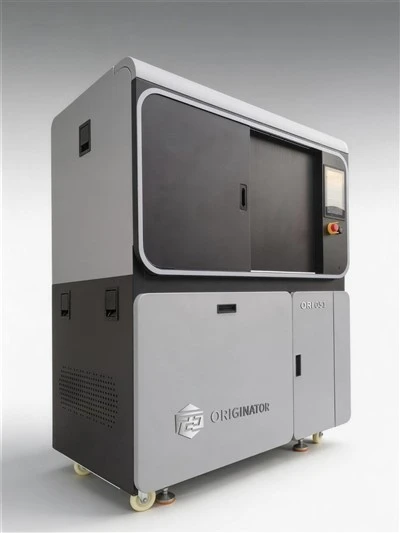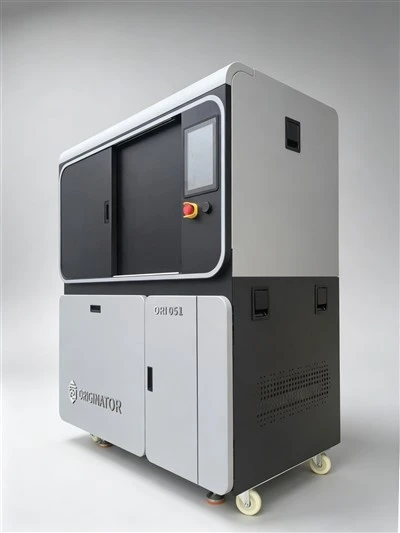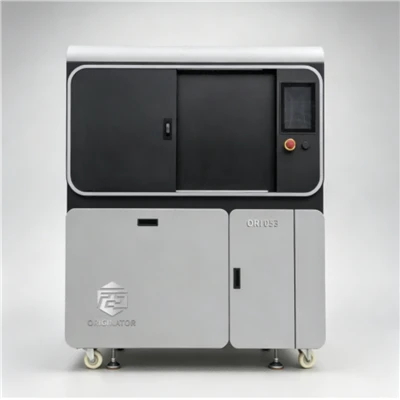
Product Overview
The Originator3D Industrial Wax 3D Printer is engineered for direct lost-wax investment casting workflows. Built on an industrial DLP optical engine and housed in a rigid alloy chassis, the system processes specialized castable photopolymers and wax-composite resins. It produces complex, thin-walled patterns with sharp edges, smooth surface finishes, and complete burnout properties. Designed for integration into foundry and high-volume jewelry production lines, the system eliminates traditional mold-making bottlenecks and manual carving variances.
-
![Precision Wax Pattern Printer]() Precision Wax Pattern PrinterHigh Resolution Wax 3D Printer Made in China | Originator 3D
-
![High Precision Jewelry 3D Printer]() High Precision Jewelry 3D PrinterHigh Resolution Wax 3D Printer Made in China | Originator 3D
-
![High Resolution Wax 3D Printer]() High Resolution Wax 3D PrinterHigh Resolution Wax 3D Printer Made in China | Originator 3D
-
![High Precision Wax 3D Printer]() High Precision Wax 3D PrinterHigh Precision Wax 3D Printer | China Jewelry Wax Printing Manufacturer | Originator3D
-
![Jewelry Wax 3D Printers]() Jewelry Wax 3D PrintersWax 3D Printers for Jewelry | Chinese Producer | Originator 3D
-
![Mjp Wax 3d Printer]() Mjp Wax 3d PrinterMultiJet Printing 3D Printer Manufacturers | Industrial MJP 3D Printing Solutions | Originator3D
-
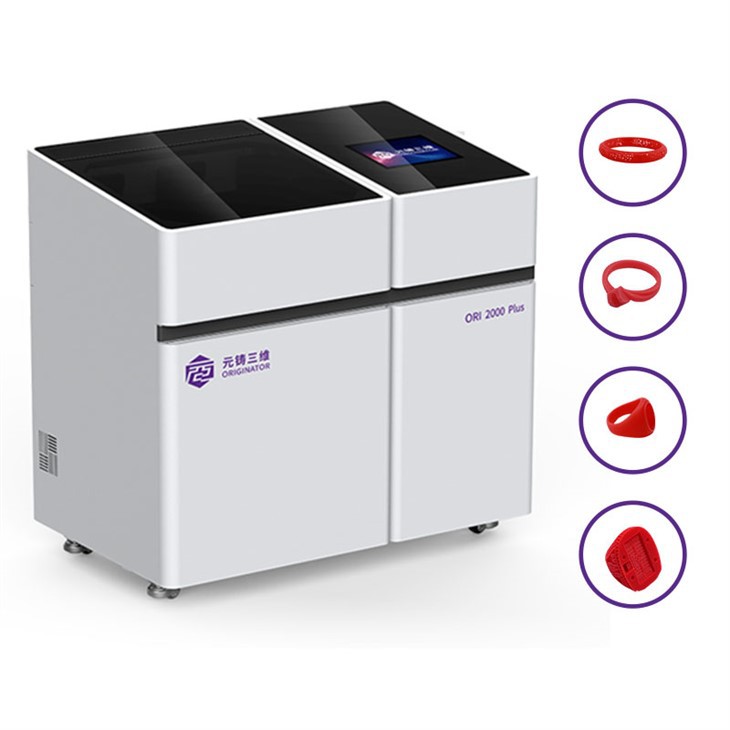
![Wax Casting 3D Printer]() Wax Casting 3D PrinterAdhering to the concept of High Precision·High Efficiency·High Cost Performance, the ORI 2000 Plus is an intelligent and digital precision Wax Casting 3D Printer, specially developed for the jewelry
-
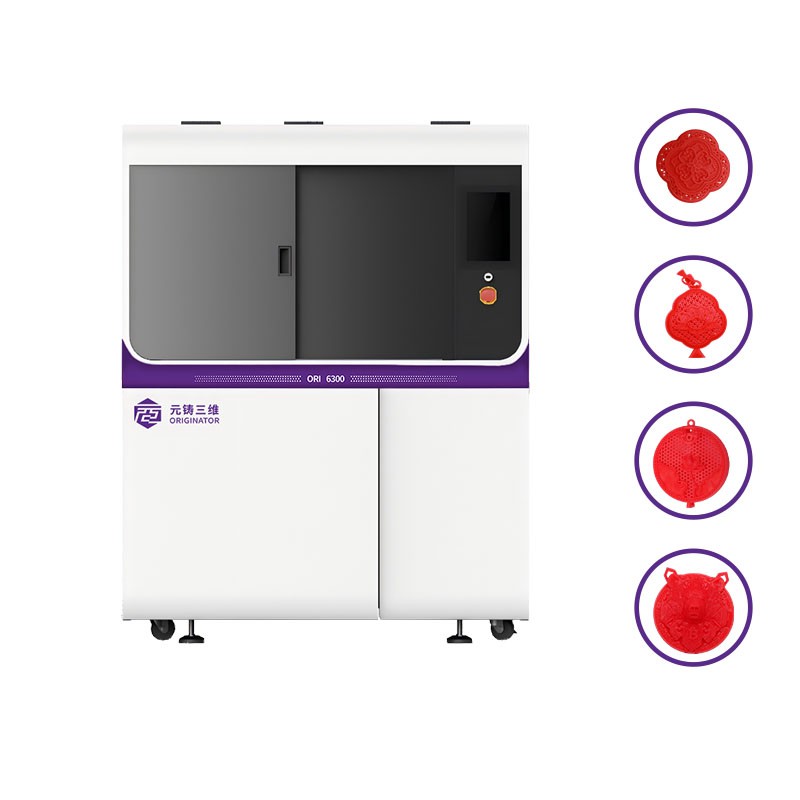
![Lost Wax Casting 3D Printer]() Lost Wax Casting 3D PrinterRevolutionize your jewelry production with the ORI 6300, Originator 3D’s next-gen Lost Wax Casting 3D Printer! Powered by proprietary three-printhead collaborative tech, it redefines efficiency for
-
![3D Wax Printer for Jewelry]() 3D Wax Printer for JewelryOriginator’s new-generation self-developed ORI6100 is a professional 3D wax printer for jewelry that delivers a comprehensive resolution upgrade, effortlessly handling all types of jewelry
-
![Jewellery Wax 3D Printer]() Jewellery Wax 3D PrinterLooking for a top-notch jewellery wax 3D printer that boosts your output? Our new MJP 3-Printhead Wax Printer is just what you need! Tailored for mass-producing jewelry and crafts, it ramps up
-
![3D Wax Model Printer]() 3D Wax Model PrinterThe ORI 2000 Plus 3D wax model printer stands as an intelligent and digital precision solution built exclusively for the jewelry industry, combining high precision, high efficiency and high cost


Key Features
Sub-Micron Optical Engine
405 nm industrial UV LED light source paired with a high-resolution DLP projection system ensures crisp geometric definition down to 25 μm features.
Rigid Z-Axis Architecture
Dual linear guide rails and a pre-loaded ball screw mechanism eliminate layer shifting and Z-axis wobble during high-aspect-ratio prints.
Constant-Temperature Resin Vat
Integrated thermal control maintains optimal resin viscosity (25°C to 30°C) for uniform layer curing across large build plates.
Open Material Parameters
Fully adjustable exposure time, lift speed, and rest time settings allow engineers to optimize prints for custom third-party casting resins.
Technical Specifications
|
Technical Parameter |
Specification Value |
|
Technology |
Digital Light Processing (DLP) / UV Stereolithography |
|
Build Volume (X × Y × Z) |
192 × 120 × 180 mm (Customizable models available) |
|
XY Resolution |
40 μm (Pixel pitch) |
|
Layer Thickness (Z-Resolution) |
10 μm to 100 μm (Adjustable) |
|
Light Source |
405 nm Industrial UV LED Array (Optical power density: 5 mW/cm²) |
|
Burnout Ash Content |
Less than 0.01% (Tested at 850°C) |
|
Print Speed |
Up to 40 mm/hour (At 50 μm layer thickness) |
|
Data Interface |
Ethernet, USB 3.0, Wi-Fi |
|
Power Requirements |
AC 100–240V, 50/60 Hz, 500W |
|
Machine Dimensions / Weight |
520 × 480 × 850 mm / 85 kg |
Materials & Compatibility
Castable Wax Resins
Contain natural wax content for traditional gypsum-bonded investment plaster burnout cycles. Softens at lower temperatures without expanding, protecting ceramic shells from cracking.
Low-Ash Polymer Resins
High tensile strength polymers designed for direct casting of industrial metal parts (stainless steel, cobalt-chrome, and precious metals) using standard thermal debinding schedules.
Third-Party Compatibility
Operates with standard STL/SLC slicing files and accepts any photopolymer sensitive to 405 nm UV light with viscosity below 1000 cps.
Applications
Fine Jewelry Manufacturing
Direct printing of intricate filigree, signet rings, and stone-setting pavé structures, bypassing rubber mold tooling.
Dental & Medical Devices
Production of removable partial denture (RPD) frameworks and surgical guide patterns requiring strict anatomical tolerances.
Aerospace & Industrial Investment Casting
Manufacturing small turbine blades, impellers, and complex internal fluid channels with wall thicknesses down to 0.3 mm.
Quality Control
ISO 9001 Manufacturing: Assembled under strict ISO 9001 quality management protocols with documented traceability from incoming raw materials to final factory acceptance testing (FAT).
Optical Calibration: Every optical engine is factory-calibrated using laser interferometers to ensure uniform light intensity distribution (≥ 95% uniformity across the projection plane).
Dimensional Verification: Calibration test prints are measured using CMM (Coordinate Measuring Machines) prior to shipment to verify linear accuracy within ± 0.05 mm.
Component Traceability: Critical motion control components (stepper motors, linear guides, optical sensors) source from tier-1 industrial suppliers with full lot tracking.
Electrical Safety Testing: Each unit undergoes high-voltage dielectric withstand testing and grounding continuity checks in compliance with CE and ETL electrical safety standards.

Technical Support
Engineering Onboarding
Remote or on-site commissioning conducted by application engineers experienced in foundry casting workflows.
Parameter Optimization Support
Provision of tested slicing profiles for standard dental, jewelry, and industrial burnout schedules.
Spare Parts Availability
Critical wear items—including resin vats, FEP/PFA films, and UV LED modules—stocked locally for 48-hour dispatch.
Firmware Updates
Lifetime access to system firmware updates via secure Ethernet connection.
FAQ

Request a Quote
To evaluate the Originator3D Industrial Wax 3D Printer for your facility, submit your technical requirements below. Our application engineers will review your specifications and provide a detailed quotation including sample print test data.
Required Information for Quotation
Target application industry (Jewelry, Aerospace, Dental, Industrial Foundry)
Required build volume and expected daily part output
Material type preference (Castable Wax vs. Low-Ash Polymer)
Target metal alloy for final casting
Hangzhou Originator 3D Technology Co., Ltd. is one of the most experienced wax 3d printer manufacturers and suppliers in China. With abundant experience, we warmly welcome you to wholesale high quality wax 3d printer made in China here from our factory. Contact us for more details.
3D Wax Model Printer, Jewellery Wax 3D Printer, wax 3d printer