Industry Insight | The Evolution of Production Capacity in Multi-Printhead Wax-Jetting
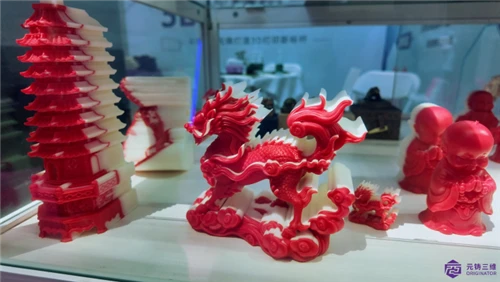
Wax-jetting 3D printing has long been positioned as an auxiliary tool for early-stage development in jewelry and precision casting. With the maturation of multi-printhead architectures, this perception is shifting. As the monthly output of wax patterns from a single machine reaches the 10–12 kg range, the industry conversation has moved from "Can it produce a high-quality sample?" to "Can this machine be integrated directly into the factory's production schedule?"
The Shift Driven by Triple-Printhead Systems: Beyond "Faster Prototyping" Toward Quantifiable Capacity
By 2026, the capacity metrics of multi-printhead wax-jetting platforms have begun to align with standardized industrial benchmarks:
Flashforge WJ530 utilizes a triple-printhead architecture, delivering a monthly output of 10–12 kg of red wax patterns with a material utilization rate of 58%–60%, all while supporting 24/7 continuous operation.
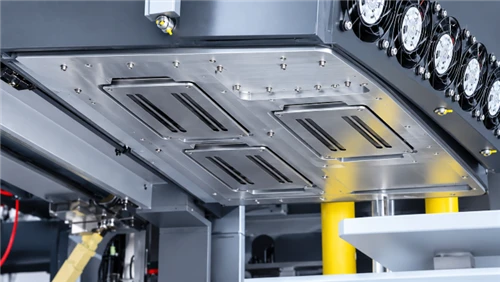
3D Systems' next-generation MJP 300 features a build area divided into multiple channels, allowing for the consolidated production of small or tall parts-accelerating scheduling without compromising quality.

Originator 3D's flagship model, the ORI 053 PLUS, also employs a robust, industrial-grade triple-printhead architecture designed specifically for continuous mass production. It integrates an active-drive waveform calibration framework with real-time droplet-placement compensation, ensuring high throughput while maintaining consistent dimensions across the entire build tray.
The significance of these figures lies not merely in "printing faster," but in the quantifiability of the output. When a machine's monthly wax-pattern yield can be scheduled in kilograms, it ceases to be a peripheral tool for the design department and becomes a schedulable unit within the production plan. For jewelry manufacturers-who often face significant fluctuations in capacity demand during peak seasons-this shift is directly linked to the reliability of their delivery commitments.
The True Value of Multi-Printhead Architecture Must Be Assessed Based on Full-Build Output
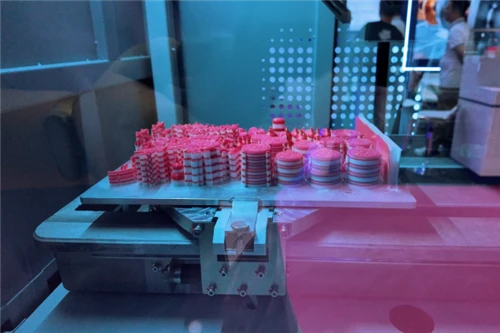
The engineering significance of a multi-printhead architecture extends far beyond the simple concept of "three printheads working simultaneously." There is a growing industry consensus that the true value of a multi-printhead system should be measured by factors such as full-tray build capacity, continuous operational capability, printhead health, and the final yield of high-quality wax patterns-rather than relying on a solitary speed figure.
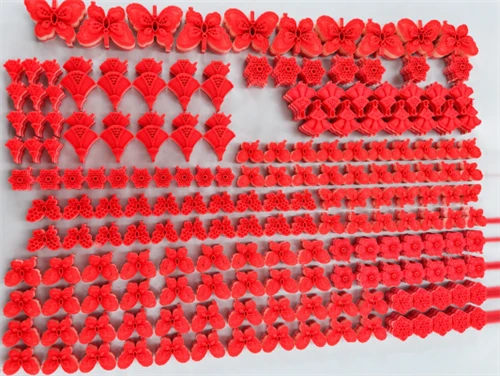
This perspective points toward a more pragmatic evaluation framework. For a three-printhead system, key questions include Is the dimensional consistency of wax patterns stable across a full build tray during continuous operation? Are deviations between the edge and center areas kept under control? After support removal and cleaning, does the quantity of acceptable wax patterns meet production scheduling targets? These metrics determine whether a system functions as a genuine "mass-production asset" or merely as a "faster prototyping machine."
From "Prototyping Capability" to "Production Scheduling Capability": A Shift in Evaluation Logic
Whether a system qualifies as a "mass-production asset" depends on three criteria: quantifiable output, repeatable precision, and continuous operational capability. Multi-printhead wax-printing platforms are increasingly meeting these standards. When a factory can calculate delivery lead times based on "monthly capacity multiplied by the number of machines"-rather than estimating feasibility based on "how many hours it takes to print a single sample"-the role of wax-pattern printing within the industry undergoes a fundamental transformation.
For foundries and jewelry manufacturers, this means that when evaluating wax-printing equipment, "dimensional stability during continuous, full-tray operation" and "the labor intensity of post-processing" must be considered just as critical as print speed. High precision during the prototyping phase does not automatically equate to a high yield during mass production.

Verify Full-Tray Consistency Using Your Own Production Geometries
If your product portfolio includes micro-set designs, thin-walled components, or high-density tray layouts, your sample validation should encompass consistency from the edges to the center, as well as dimensional stability throughout a continuous printing process. Our applications engineering team can conduct production-representative sample evaluations on the ORI 053 PLUS platform, using your specific CAD geometries and tray layouts.
Submit CAD files to request the production of representative validation samples.
Contact the Application Engineering Team.
Issued by: Originator 3D – Global Application Engineering & Cross-Border Compliance Audit Center
Technical Inquiries: sales@originator3d.com
Note: Production capacity and precision data are dependent on part geometry, nesting density, wax material batches, and environmental conditions.