Industry Insight | Investment Casting and MJP Wax Pattern Printing
Investment casting (also known as lost-wax casting) is a precision manufacturing process with a history spanning millennia. From ancient bronze artifacts to modern high-end jewelry and precision industrial components, it remains a core technology for producing complex metal parts.
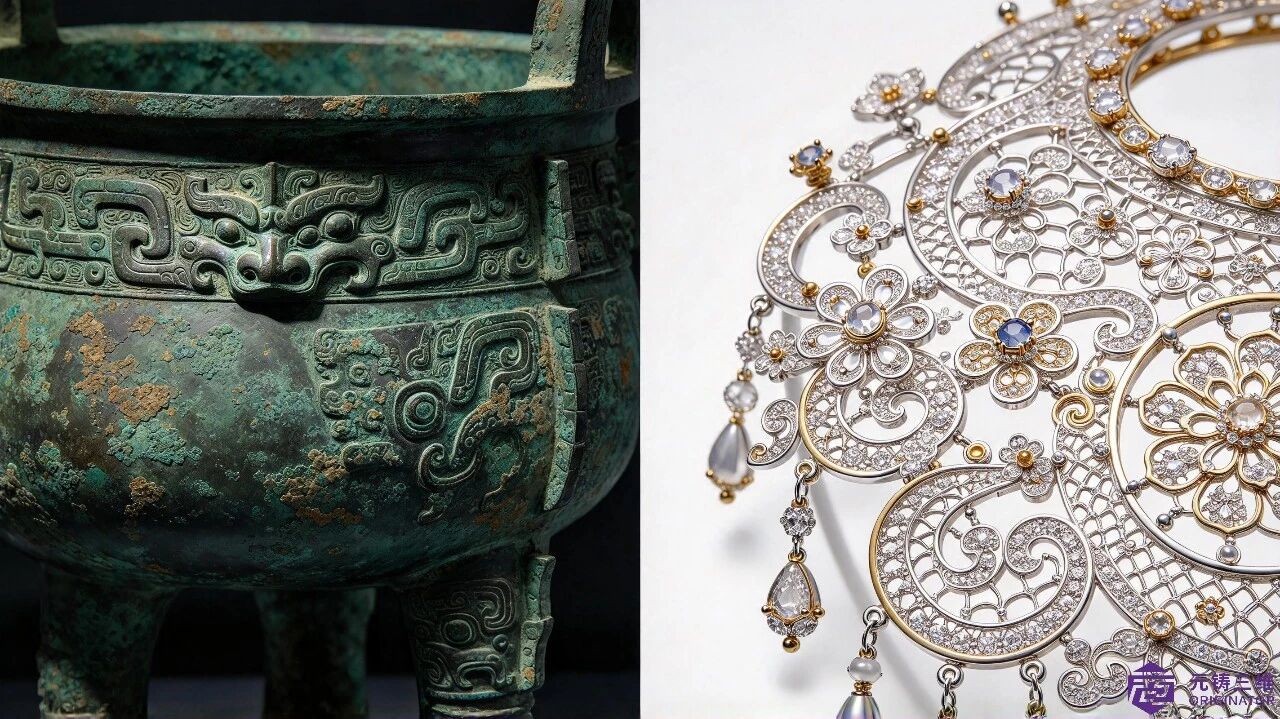
Today, this age-old craft is undergoing a deep integration with modern additive manufacturing (3D printing). The most pivotal transformation occurs at the very beginning of the production line: the creation of wax patterns.
Many in the industry ask, "Is 3D printing going to replace traditional casting?"
The answer is quite the opposite. 3D printing does not replace casting; rather, by optimizing the initial wax-pattern-making stage, it enhances the value of the subsequent, well-established processes-shell building (slurry and sand coating), dewaxing and firing, and metal pouring.
To truly grasp the value of 3D printing, we must first examine the complete investment casting workflow.
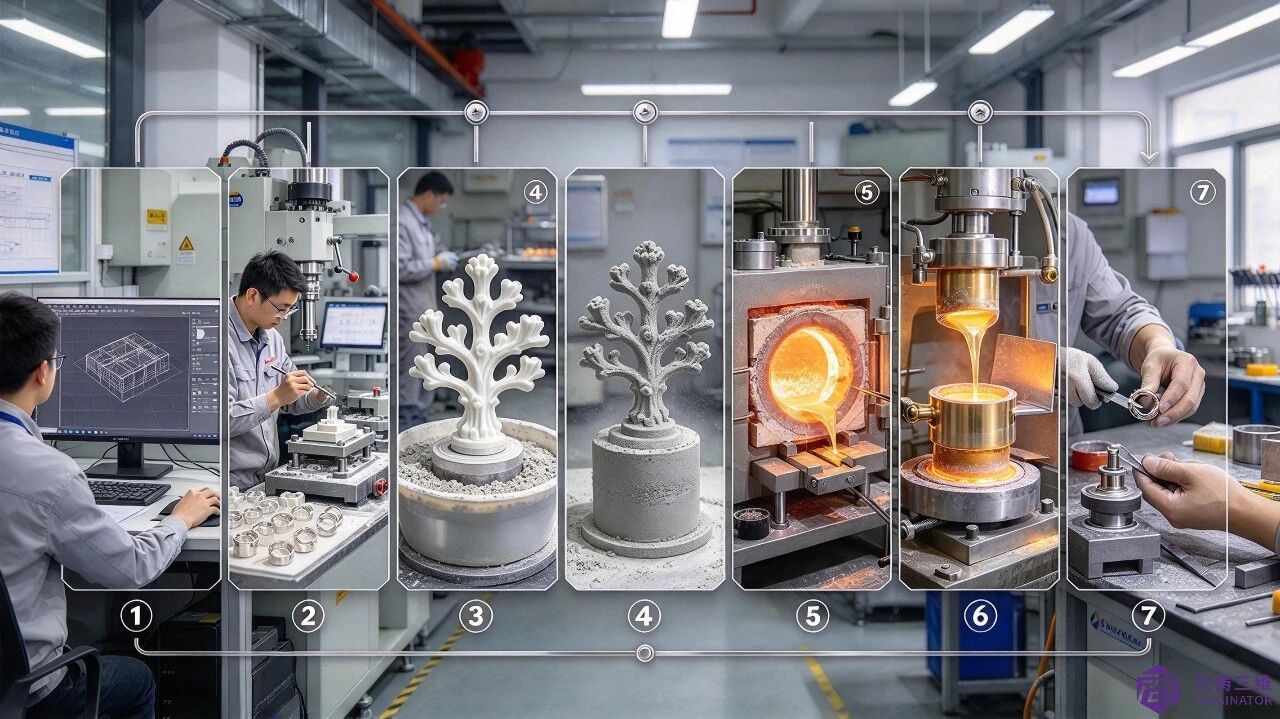
The 7 Core Stages of Investment Casting
From initial design to the final product, a precision casting typically undergoes seven key stages:
Design and Modeling
Wax Pattern Creation
Assembly of the Wax Tree (Gating System)
Shell Building (Applying Investment Material)
Dewaxing and Firing
Metal Pouring
Cleaning and Finishing
As the starting point of the entire production line, the precision and quality of the wax pattern directly determine the dimensional accuracy and surface finish of the final casting.
Traditionally, wax patterns are produced via two primary methods:
Manual Wax Carving: Relies on the expertise of skilled artisans; it is slow, limited in capacity, and inconsistent in reproducing fine details.
Mold-Based Wax Injection: While suitable for mass production, it entails high costs for metal molds and long lead times for design changes, making it ill-suited for today's demand for high-variety, small-batch production.
Where Does 3D Printing Fit In?
The prevailing digital solution involves a complete overhaul of "Stage 2: Wax Pattern Creation."
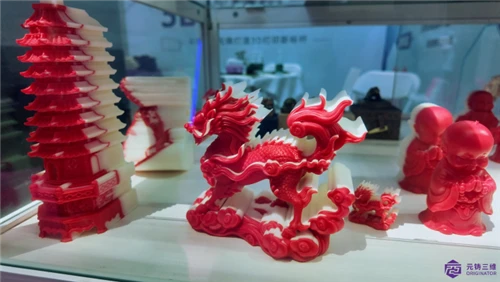
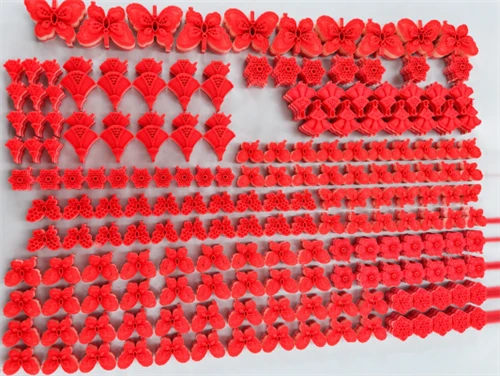
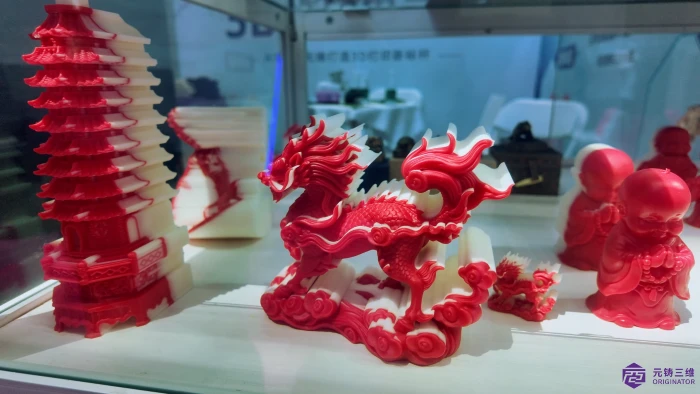
Designers no longer need to rely on manual carving or metal molds; instead, they can import 3D CAD files directly into an industrial-grade MJP (Multi-Jet Printing) wax 3D printer. The machine builds the patterns layer by layer using 100% pure wax. In just a few hours, a full build plate of high-precision wax patterns is ready for the casting process.
Crucially, from this point forward, the path to the finished product remains identical to traditional lost-wax casting. The pure wax patterns produced by the system are fully compatible with existing investment (plaster) slurries and burnout processes. This allows factories to achieve a digital upgrade in wax pattern production without requiring extensive facility overhauls.
Structural Advantages of MJP Wax Printing
Integrating industrial-grade 3D wax printing into your workflow drives a structural transformation in production:
Elimination of Molds: Removes the need for costly metal molds and the associated lead times.
Rapid Prototyping: Compresses the R&D and prototyping cycle for new products from days or weeks down to just a few hours.
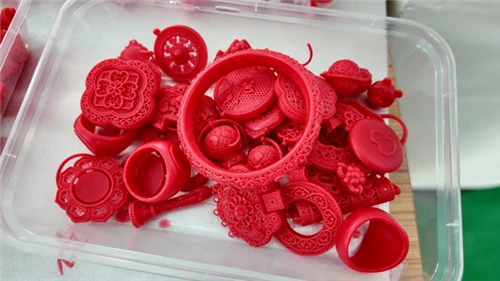
Handling Complex Geometries: Easily produces intricate filigree, complex internal channels, or delicate prong settings in a single build, overcoming limitations of manual craftsmanship.
Exceptional Consistency: Ensures high precision across batches and more stable yield rates, significantly reducing reliance on the specialized skills of individual master craftspeople.
A More Efficient Approach to Production
In short, lost-wax casting is not obsolete; it has simply evolved to utilize a more efficient and stable method for producing wax patterns.
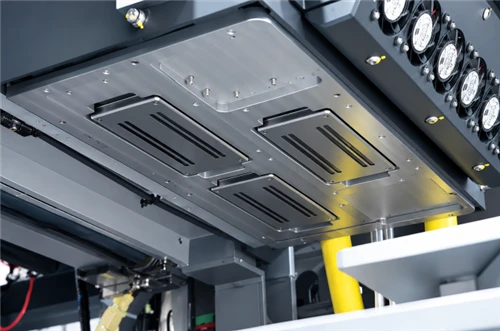
The ORI series of industrial-grade wax 3D printers from Originator 3D produces pure wax patterns designed to integrate seamlessly into your casting workflow. We provide comprehensive support-from hardware and wax materials to process validation-to help jewelry and precision casting enterprises complete their digital transformation.
Validate Real-World Casting Results with Your Own Products
If you would like to see how 3D-printed wax patterns perform with your specific products, please submit your CAD files or process requirements. Our application engineering team can arrange a complimentary sample validation for you using the ORI 053 PLUS platform. Let the physical results speak for themselves-evaluate the actual casting outcome before making your decision.
👉 Submit your CAD files to request a complimentary sample validation.
👉 Contact our application engineering team.
Issued by: Originator 3D Global Application Engineering & Cross-Border Compliance Audit Center
Technical Inquiries: sales@originator3d.com
Note: Performance and cost data may vary based on factors such as part geometry, wax material batches, production volume, and local inspection standards.