Industry Insights | Jewelry Manufacturing and 3D Wax Printing
Wax setting-also known as "stone-in-place wax setting" or "cast-in-place stone setting"-is an advanced jewelry manufacturing technique in which gemstones are secured into a wax model before the casting process begins. Unlike traditional jewelry manufacturing, where stones are set into the metal only after it has been cast, the wax-setting method keeps the gemstones in their designated positions throughout the entire lost-wax casting process. Because the stones are cast simultaneously with the metal, this technique is widely referred to as "stone-in-place casting."
The typical production workflow includes: wax model creation, stone setting, assembly into a "wax tree," investment (plaster mold) casting, burnout (wax removal), metal pouring, and final polishing. Since the gemstones are already in place before casting, manufacturers can significantly reduce the amount of post-casting stone setting required, leading to faster production, lower labor costs, and more consistent product quality.

With the rapid adoption of digital jewelry manufacturing, the wax-setting process is increasingly being integrated with 3D wax printing. Once a CAD design is finalized, manufacturers can use industrial-grade 3D wax printers to produce high-precision wax models, which are then ready for stone setting and casting. This integrated workflow offers greater precision, improved repeatability, and superior production efficiency.
Why Are More and More Jewelry Manufacturers Adopting Wax Setting?
The primary advantage of wax setting lies not just in the setting technique itself, but in the fact that it shifts the stone-setting stage from after casting to before casting. Instead of manually setting each gemstone into a finished metal piece, manufacturers secure the stones while the design is still in its wax-model phase, allowing the casting process to handle the bulk of the stone-setting work automatically.
For jewelry factories producing items such as diamond rings, pendants, earrings, and pavé-set jewelry-where a single piece might contain dozens or even hundreds of small gemstones-this approach is highly advantageous. Traditional post-casting stone setting-which requires each gemstone to be individually positioned, secured, inspected, and adjusted-is both time-consuming and labor-intensive.
With the wax-setting technique, most small gemstones are precisely positioned during the wax-model stage. Once casting is complete, the jewelry requires only minimal finishing and polishing before moving to final inspection. In suitable applications, this method can significantly boost production efficiency, lower labor costs, reduce the amount of precious metal removed during finishing, and enhance overall manufacturing consistency.
For these reasons, wax-setting has become one of the most vital production processes for the large-scale manufacturing of gold jewelry (10K, 14K, and 18K) and stone-set silver jewelry.
Which Types of Jewelry and Gemstones Are Suitable for Wax Setting?
Wax-setting is primarily used for jewelry designs that incorporate multiple small gemstones, especially those intended for mass production. Typical applications include diamond rings, multi-stone eternity or band rings, diamond pendants, diamond stud earrings, pavé-set jewelry, and various 10K/14K/18K gold or stone-set silver pieces.
In most cases, wax-setting is best suited for heat-resistant gemstones ranging from approximately 0.0033 carats (0.33 points) to 0.10 carats (10 points) in size. Because these small stones are subjected to relatively low thermal stress during the casting process, this method typically yields higher production success rates, making it ideal for large-scale jewelry manufacturing.Which gemstones are unsuitable for wax-setting?
While wax-setting offers exceptional production efficiency, not all gemstones can withstand the high temperatures involved in lost-wax casting. During the dewaxing and casting phases, stones may be exposed to temperatures between approximately 650°C and 900°C (1200°F–1650°F); therefore, heat resistance is a critical factor. The following gemstones are generally not recommended for wax-setting:
Pearls, coral, opals, amber, jadeite, emeralds, tourmaline, aquamarine, and amethyst.
Some gemstones-whether organic materials with poor heat resistance or minerals containing fissures, inclusions, or structural water-are prone to cracking, discoloration, or permanent damage during the casting process. To ensure reliable production, manufacturers typically select heat-resistant materials, such as diamonds, cubic zirconia (CZ), or certain lab-grown sapphires, for "stone-in-place" casting.
Four Main Types of Wax-Based Stone Setting
Depending on how the gemstones are secured within the wax model, wax-based setting can be categorized into four primary techniques. The choice of technique depends on the jewelry design, gemstone size, production scale, and the desired visual effect.

1. Wax Prong Setting
The most widely used wax-based setting technique. During the wax modeling phase, prongs are pre-formed around the stone seat. A heated wax tool is then used to soften these prongs, allowing them to gently wrap around the girdle of the gemstone. Configurations such as two, four, or six prongs-or shared prongs-can be used, significantly reducing the need for manual stone setting after casting. Commonly employed for diamond rings, pendants, earrings, and bridal jewelry.
2. Wax Bead Setting
Gemstones are secured by applying small droplets of molten wax to create tiny "beads" around each stone. These beads are formed individually during the setting process, offering great flexibility for positioning multiple small stones. Particularly well-suited for pavé, cluster, and halo designs.
3. Wax Channel Setting
Multiple gemstones are arranged within a continuous channel carved into the wax and secured in place. Once cast, this creates a clean, unbroken row of stones. This method demands high precision, as the size, spacing, and alignment of each gemstone must be strictly controlled. Frequently used for eternity bands, wedding rings, and tennis bracelets.
4. Wax Invisible Setting
Designed to minimize visible metal, this technique creates the appearance of a continuous surface of gemstones. The stones are held in place by a concealed support structure located beneath them. This method requires exceptionally precise wax modeling and rigorous dimensional control; it is primarily reserved for high-end jewelry and luxury collections.
Advantages and Limitations of Wax Setting
Key Advantages:
Higher Production Efficiency: Significantly reduces the manual labor required for stone-setting after the casting process.
Lower Labor Costs: Particularly beneficial for jewelry pieces featuring dozens or even hundreds of small gemstones.
Reduced Precious Metal Loss: Less post-processing means less filing, polishing, and material removal.
Greater Quality Consistency: Digital wax patterns and standardized production ensure consistent dimensions across batches.
Automation-Ready: Seamlessly integrates with jewelry CAD software and industrial-grade wax 3D printing systems.
Limitations and Challenges:
Only heat-resistant gemstones are suitable for the cast-in-place process, and they must be securely fixed within the wax pattern. If a stone shifts during the investment or dewaxing process, the entire casting may be rendered unusable. Even when using appropriate gemstones, modern manufacturers typically require rigorous process control to keep the stone breakage rate to approximately 1%–2%.
Why Is Wax Setting Increasingly Reliant on Jewelry Wax 3D Printing?
As digital manufacturing reshapes the jewelry industry, more and more manufacturers are replacing hand-carved wax patterns with high-precision 3D-printed wax models.
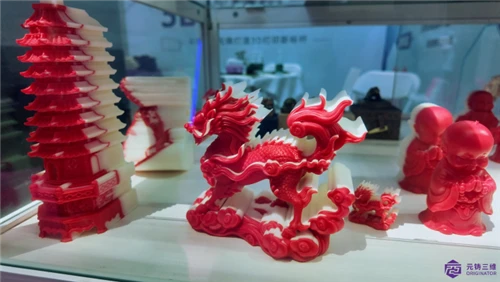
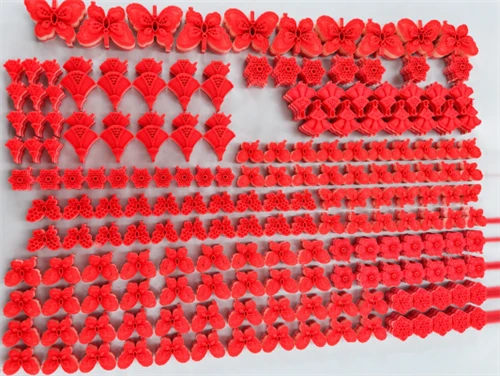
Compared to traditional hand-carving, professionally printed wax patterns offer superior dimensional consistency. Prongs, channel dimensions, stone seats, and other critical features can be reproduced with extreme precision, providing a more reliable foundation for wax setting. For pavé settings, channel-set designs, and custom jewelry, wax 3D printing significantly improves production consistency and casting success rates.
Today, jewelry CAD design, wax 3D printing, wax setting, and lost-wax casting form a fully integrated digital manufacturing workflow, enabling jewelry factories to produce complex designs with greater speed, efficiency, and repeatability.
Upgrade Your Wax-Setting Production Line with Industrial-Grade Wax 3D Printing
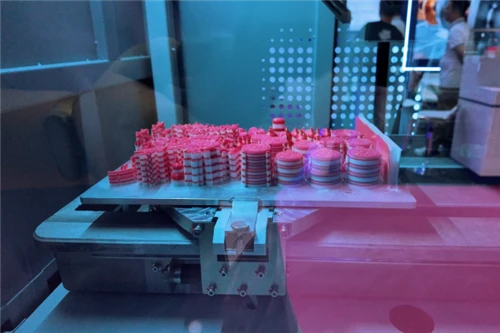
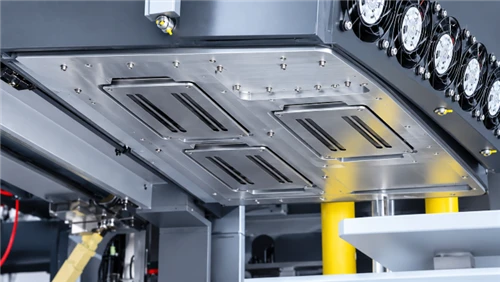
At Originator 3D, we specialize in providing industrial-grade MJP (Multi-Jet Printing) wax 3D printing solutions to jewelry factories worldwide. Our ORI series (such as the ORI 053 PLUS) produces high-precision, smooth-surfaced, 100% pure wax patterns-perfectly tailored for "cast-in-place" (stone-in-place) jewelry workflows.
Whether you are producing pavé-set diamond jewelry, eternity bands, or high-end bespoke pieces, we help you achieve greater consistency, lower scrap rates, and faster turnaround times.

Want to verify if your stone-in-place designs are ready for printing?
Submit your CAD design files, and our application engineering team will arrange a free sample validation-let the actual casting results provide the answer.
Submit your CAD files to request a free sample validation
Contact the Originator 3D Global Application Engineering Team
Official Issuer: Originator 3D – Global Application Engineering & Cross-Border Compliance Audit Center
Technical Inquiries: sales@originator3d.com
Note: Actual production yields and performance data may vary based on factors such as gemstone type, metal alloy, workshop environment, and specific process protocols.