Industry Insights | Process Control and System Architecture for Multi-Jet Printing (MJP) of Wax
Industrial inkjet technology is converging with additive manufacturing. The agenda for industrial printing technology through 2026 is increasingly shaped by two key trends: high-viscosity jetting, which enables the stable deposition of thicker, more functional materials, and multi-material platforms, which allow for the combination of different functional fluids within a single print job. For Multi-Jet Printing (MJP) of wax, this convergence is not merely theoretical; it is redefining what "industrial-grade" means at the machine level.
The Printhead: A Necessary, But Not Sufficient, Condition
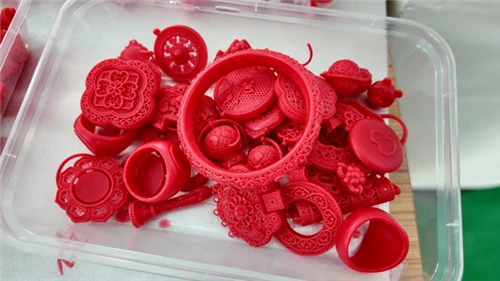
Industrial-grade, high-throughput printheads capable of handling ultra-high-viscosity fluids have made it possible to jet molten investment-casting waxes at production-relevant deposition rates. Third-party printhead suppliers now explicitly position their products for wax-casting systems, noting that wax-pattern production demands high levels of precision, repeatability, and operational stability. The ultimate goal is to transition industrial inkjet from a "prototyping tool" into a "reliable manufacturing process."
However, acquiring a functional printhead is merely the entry ticket. The true engineering challenge in multi-nozzle wax jetting lies in system integration:
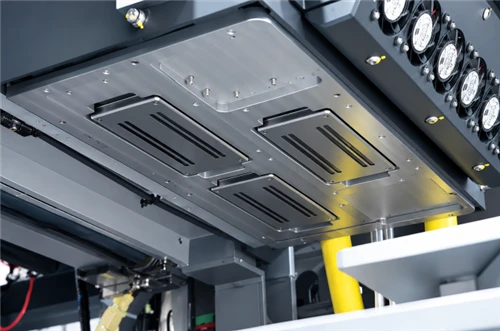
Aligning nozzles across multiple printheads and maintaining that alignment throughout thermal cycling and extended print runs;
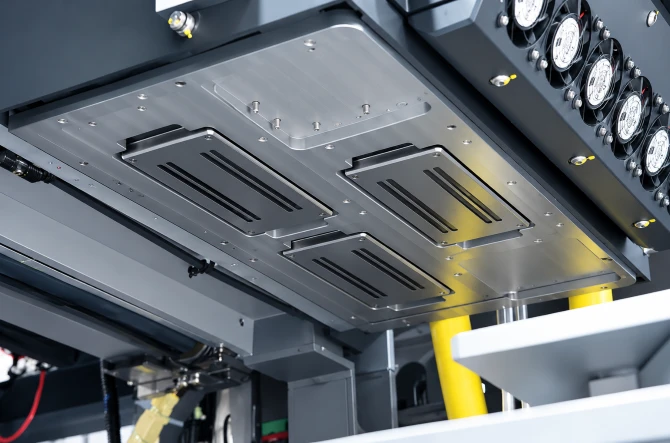
Synchronizing jetting to prevent overlapping or gaps between deposition zones of adjacent nozzles;
Implementing closed-loop control for thermal fields and negative pressure to ensure the molten wax maintains a stable viscosity for consistent jetting;
Developing calibration and compensation algorithms to correct for carriage motion, airflow disturbances, and positional drift across the entire print area.
Industry assessments of multi-jet wax platforms have made one thing clear: using the same industrial printhead does not guarantee the same print quality. This is because the core engineering hurdles reside in the integrated control system, rather than in the printhead itself.
High-Viscosity Jetting and the Unique Constraints of Wax
While high-viscosity jetting is often discussed in the context of functional inks and industrial coatings, the constraints for wax are distinct. Molten investment-casting wax is jetted at high temperatures and solidifies rapidly upon contact with the substrate. This means that any inconsistencies in droplet velocity, size, or trajectory are effectively "frozen" into the layer-there is no slow spreading or self-leveling to smooth out uneven deposition.
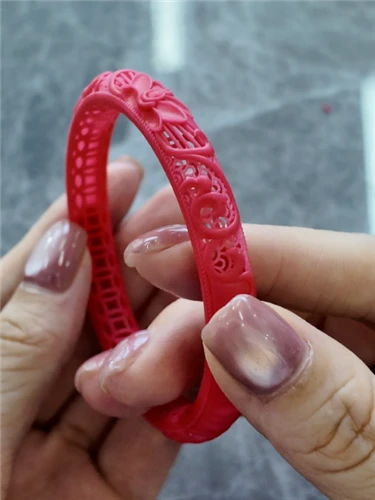
This is precisely why drive-waveform calibration and closed-loop drop-placement compensation are even more critical in wax-jetting than in other inkjet applications. The process window is narrower; the cost of satellite droplets or trajectory deviations manifests as dimensional errors that compound with every subsequent layer during shell building and casting.
What "Industrial-Grade" Should Mean in 2026
For foundries and jewelry manufacturers evaluating multi-nozzle wax-jetting platforms, technical specifications should be considered alongside questions regarding these three levels of integration:
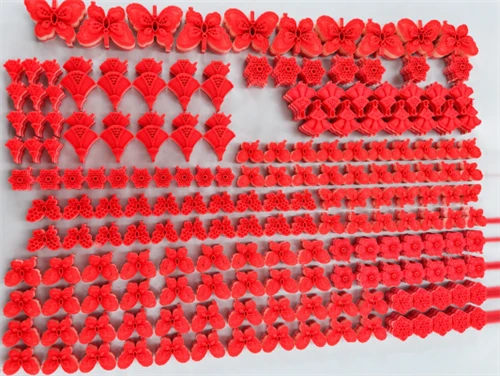
Does the platform maintain consistency across the entire build tray, or is accuracy limited only to the center?
How does the system manage thermal drift and nozzle alignment during high-density, multi-hour print runs?
Is the support-removal workflow compatible with your shell-building chemistry, or does it introduce a risk of interfacial contamination?
These are not merely marketing differentiators; they represent the fundamental distinction between a machine that "looks good in a demo" and a platform that is "production-ready." As industrial inkjet technology continues to converge with additive manufacturing, the competitive divide in wax-jetting will no longer be defined by access to printhead technology but by the capability for system-level process control.
Evaluate System-Level Jetting Consistency Using Your Own Geometries
If you are evaluating a multi-nozzle wax-jetting system for high-density wax pattern production-specifically regarding full-tray dimensional consistency, stability in depositing high-viscosity materials, or compatibility with support-removal processes-our applications engineering team can arrange sample validation on the ORI 053 PLUS platform using your own CAD geometries.
Submit your CAD files to request sample validation.
Contact our applications engineering team.
Official Issuer: Originator 3D Global Applications Engineering & Cross-Border Compliance Audit Center
Technical Inquiries: sales@originator3d.com
Note: Performance data may vary based on part topology, specific batches of wax material, printhead configuration, environmental conditions, post-processing specifications, and metrology standards.