

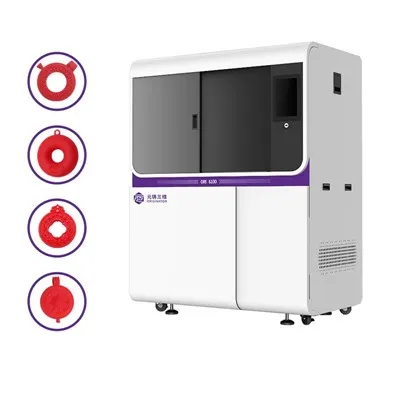
If you're still doing precision casting the old way – tooling → modifying → sampling –
you've definitely run into these three problems:
❌ Afraid to take small orders (can't amortize tooling cost)
❌ Crying over mold revisions (one change = new mold)
❌ Can't make complex geometries (customer goes elsewhere)
And that's exactly why 3D printing is disrupting traditional wax pattern manufacturing.
It's not an upgrade – it's a revolution.
Truth #1: From "physical tooling" to "direct digital output" – 10x faster
Traditional wax pattern:
Design → metal mold → wax injection → mold repair → sampling → rework… weeks or more
3D printed wax pattern:
Import CAD data → one-click print → physical part in hours or tens of minutes
In essence, 3D printing has completely broken the physical constraint of "must rely on a mold".
This means:
Customer changes design? No problem – adjust parameters in software, get a new wax pattern the next day
R&D validation cycles from months to days
Average R&D time reduced by over 60%
Speed eats the market.
Truth #2: Small-batch orders finally become profitable
Why were you afraid to take orders for 200 or 500 parts before?
Because a mold costs tens of thousands – spread over each part, costs go through the roof.
3D printing's cost curve is completely different:
No tooling cost
Per-part cost is almost unaffected by batch size
10 samples are profitable – so are 500 production parts
Today, for medical devices, high-end equipment, aerospace… those fragmented, customized high-margin orders –
only foundries using 3D printing dare to take them, can take them, AND make money on them.
Truth #3: Complex geometry is no longer a barrier – it's your pricing power
Traditional wax injection molding, when faced with deep cavities, undercuts, ultra-thin walls, conformal channels…
can only be split into a dozen pieces to assemble – slow and error-prone.
But 3D printing forms in one go – no matter how complex the geometry, it's accurately reproduced.
✅ No assembly errors
✅ No manual finishing labor
✅ Engineers no longer compromise design for "manufacturability"
When others can't make it, you can quote double.
More than wax patterns: the path to Industry 4.0
The adoption of 3D printing in wax patterns is essentially building end-to-end digital capability for your foundry:
Front end: topology optimization
Middle end: automated nesting and printing
Back end: seamless integration with traditional shelling & pouring
You no longer rely on "the feel of a master craftsman" –
you drive the entire production chain with data.
This is the starting point of the future lights-out factory.
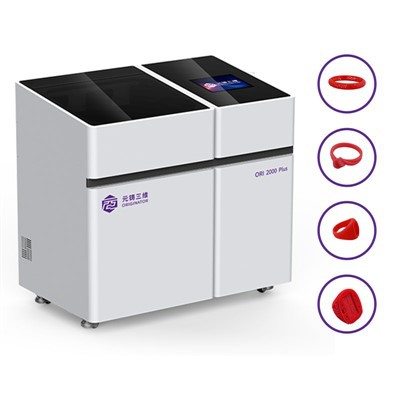
Will your next order still be held back by tooling?
Don't wait. Your competitors are already using 3D printing to capture those "small-batch, high-margin, complex-geometry" orders.
Contact Originator now for a custom 3D printing solution + free sample test.
We'll show you exactly how many more orders you can take – and how much more profit you can make – by changing the way you make wax patterns.
Click here to unlock the advantages of flexible manufacturing