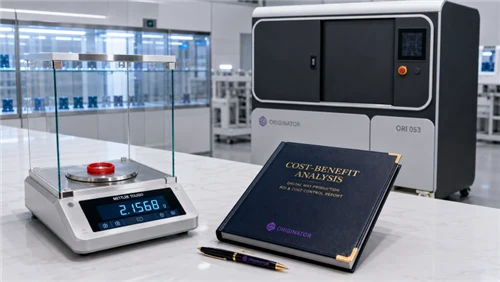
Have you ever done the math?
A traditional wax pattern mold can cost tens of thousands of dollars and take 2-4 weeks. Worse yet – if the customer requests just one design change, that mold instantly becomes scrap metal.
This is the real pain point of traditional lost-wax casting: You sink money before even getting the order. You burn time before making any profit.
But today, everything has changed.
3D printing is eliminating the "tooling" step entirely.

It's not a minor fix – it fundamentally rebuilds the cost structure of precision casting. If you're still quoting jobs the old way, here are 4 truths you need to read carefully.
1. The disappearing "hidden cost": 3D printing saves you 90% of tooling fees
In the traditional process, you must go through: design → tooling → mold modification → sampling → rework… every step costs money.
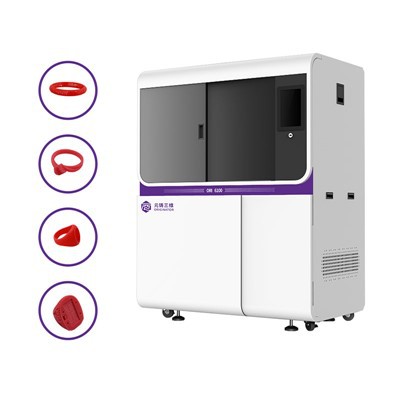
3D printing is extremely simple: just one 3D CAD file, print the wax pattern or core directly.
✅ No metal or resin mold required
✅ Skip the 2-4 week tooling lead time
✅ Upfront investment slashed by 50% – 90%
What does this mean?
You can finally validate products, make samples, and take small-batch orders without spending a dime on tooling.
2. Scrap rate from 15% down to near zero: precision equals profit
Traditional casting fears mismatch between assembled cores – dozens of parts assembled, one misalignment ruins everything. Scrap rates often exceed 15%.
Industrial 3D printing achieves accuracy of ±0.1mm to ±0.2mm.
✅ Excellent dimensional consistency
✅ No assembly errors
✅ Complex internal cavities printed in one piece
One less scrap part = pure profit.
3. Development cycle cut by 60%: while others wait for molds, you're already shipping
A real aero engine turbine blade project:
Traditional method: weeks → 3D printing: just days.
Total lead time reduced by 65%.
And 3D printing supports mixed production: different part numbers and sizes printed together in one batch.
✅ Design today, cast tomorrow
✅ Small-batch orders are finally profitable
✅ No more excess inventory
4. Break the "impossible": structures you couldn't make before are now your moat
3D printing is not just a replacement tool – it's a performance amplifier.
Conformal cooling channels, complex curved surfaces, hollow flow paths… structures that traditional casting can't handle are easily produced by 3D printing.
That's exactly why premium customers pay a premium price.
If you can't do it, but your competitor can – that order goes to them.
Your competitors are already moving
From "spend on tooling first, then trial & error" to "digital validation first, then mass production" –
3D printing is moving precision casting from "humans adapting to machines" to "digital smart manufacturing".
Don't let traditional molds slow down your R&D.
Contact Originator now for a custom 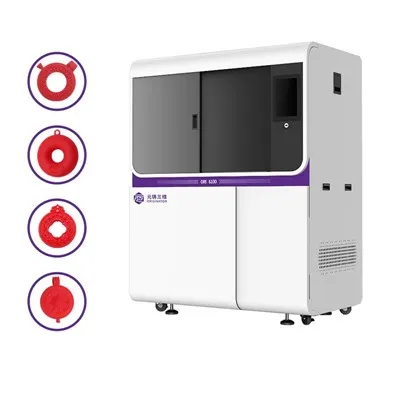 3D printing quote or a free sample evaluation.
Let us help you calculate exactly how much you can save – and how many days you can cut.