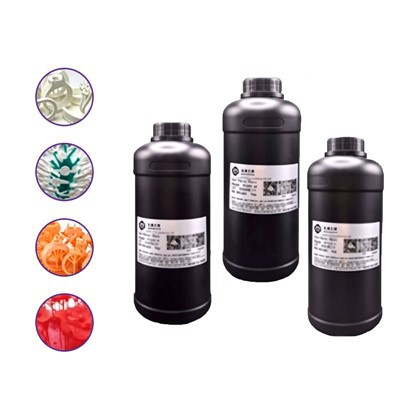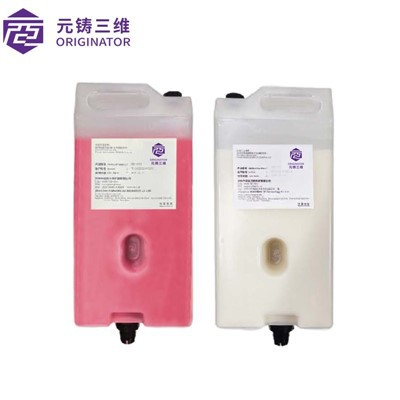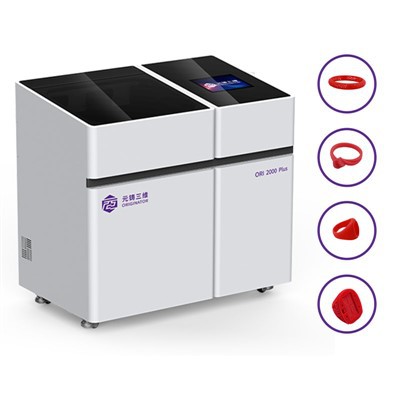
If you've ever worked in industries like jewelry manufacturing, dental prosthetics, or rapid prototyping, you've probably heard a common question bounce around workshops: Can build wax material be used for creating detailed models? As a supplier specializing in wax-based 3D printing materials, I get asked this all the time-and the short answer is yes, it's not just a possibility, but a game-changer for intricate, precision-driven models that other materials often struggle to produce. Let's break down why build wax material stands out, how it stacks up against alternatives, and the real-world applications that prove its value for detailed work.
First, let's get clear on what makes a material good for detailed modeling. When you're creating a model with fine features-say, a tiny filigree pattern in a jewelry piece, the tiny grooves on a dental crown, or a complex internal structure in a prototype-you need three key things: high resolution (the ability to capture tiny, distinct details), dimensional stability (so the model doesn't warp or shrink mid-process), and consistency (so every print, even a long run, matches exactly). That's where build wax material shines. In MJP (MultiJet Printing) technology, build wax is selectively jetted through printheads and deposited layer by layer to form solid wax models. Its material properties are designed to support precise model formation, helping reproduce fine lines, intricate curves, and complex geometries required in jewelry manufacturing and investment casting.
Let's dive into resolution first. Many people assume that photopolymer resins (another common 3D printing material) are the go-to for high detail, but that's not always the case for models that need to transition to a secondary process, like casting in jewelry or dentistry. In MJP (MultiJet Printing) technology, build wax is deposited layer by layer through precision printheads, allowing the production of intricate jewelry patterns and complex geometries directly from CAD designs. That means even the smallest features, like a 0.2mm-wide engraving or a delicate chain link, come out crisp and true to the original design. I've seen first-hand how this works with our own Wax Printing Material line, which is optimized for desktop and industrial 3D printers used by small jewelry shops. A customer of ours recently told me they switched from resin to build wax for creating engagement ring prototypes, and they stopped having to sand away blurry edges on the setting details-saving them 2-3 hours per model on post-processing.
Dimensional stability is another big one for detailed models. If a model shrinks or warps even 0.5mm, that can ruin a complex design-like a dental crown that needs to fit perfectly over a tooth, or a jewelry piece that's sized to a specific ring gauge. Build wax material is formulated to have a very low coefficient of thermal expansion, which means it barely changes size when it cools from its printing temperature (usually around 60-80°C) to room temperature. Compare that to standard thermoplastics like PLA, which can shrink up to 5% when printed, or some resins that shrink 2-3% during curing-for a model that's only 10mm tall, that's a difference of 0.2mm, which might not sound like much until it makes a jewelry setting too small to fit a gemstone. Our Jewelry Printing Wax product line, in particular, is tested for dimensional accuracy within ±0.1%, which is critical for jewelry makers who rely on precise fits for gemstones, bands, and engravings.
Now, you might be wondering: If build wax is so good for detailed models, why isn't everyone using it? Part of it was a perception issue for a long time-wax was seen as a low-cost, low-detail material for lost-wax casting, not for high-precision work. But advances in wax formulation have changed that. Modern build wax isn't the soft, crumbly wax of old candle-making kits; it's a engineered material with additives that make it tough enough to handle post-printing handling (like removing support structures) but soft enough to melt cleanly during burnout. That last point is huge for detailed models-if any residue is left behind during burnout, it can create defects in the final cast part.Our 100% pure wax printing material is designed for investment casting applications, offering clean burnout performance and minimal ash residue when processed under a suitable burnout schedule.
For customers making dental bridges, this means fewer defects in the final metal crowns, and for jewelry makers, it means a smoother final piece without the need to fix burn marks from leftover wax.
Let's talk about a specific example where build wax material excels: small-scale dental models. Dental prosthetics, like inlays, onlays, and crowns, require extremely detailed models that match the exact shape of a patient's tooth. Before 3D printing, these models were made by hand with wax carving, which took hours and relied heavily on the skill of the technician. Now, with industrial 3D printers using build wax, a dental model can be printed in 1-2 hours, with features as small as 0.1mm captured perfectly. A colleague of mine who runs a dental lab told me they used to have a 15% failure rate on crown casts because the hand-carved wax models had tiny imperfections that showed up in the metal. Since switching to build wax for their models, their failure rate has dropped to less than 2%, and their technicians have more time to focus on patient consultations instead of hand-carving.
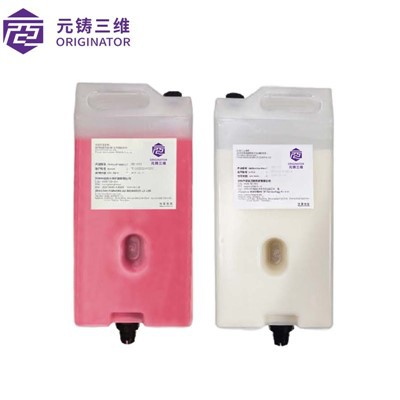
Another area where detailed models are key: prototype parts for aerospace or automotive industries. Even though these industries use metals, they often need detailed wax models for investment casting of small components, like engine valves or sensor housings. These models need to have complex internal channels, sharp edges, and tight tolerances-all things that build wax can handle. Unlike some thermoplastics, which can become too flexible to hold their shape when creating thin internal features, build wax has a balanced stiffness that keeps delicate structures intact during printing and handling. Our Purple Wax Material, which is used in industrial large-format printers, has a higher melting point than standard build wax, making it ideal for larger detailed models that would otherwise deform during post-processing.
Of course, build wax isn't perfect for every detailed model. If you're creating a large-scale model (like a sculpture) where resolution is less critical than strength, a thermoset plastic might be a better, cheaper option. Or if you need a model that's going to be used as a final product (not just a prototype for casting), then a durable resin might work better. But for 90% of the detailed models we work with-jewelry, dental, small investment casting prototypes-build wax is the most cost-effective, high-quality choice. One common mistake I see customers make is assuming that "wax is wax" and buying a low-cost wax from a general supplier, only to find that it has inconsistent quality, high ash content during burnout, or poor detail capture. That's why it's important to work with a supplier that formulates wax specifically for 3D printing and detailed modeling, not just general wax products.
Let's circle back to the original question: Can build wax material be used for creating detailed models? From my experience as a supplier, the answer is a resounding yes-but only when it's the right type of build wax, optimized for the specific needs of detailed work. The days of wax being a low-detail, low-precision material are long gone; modern build wax is engineered to meet the strict requirements of industries that rely on tiny, accurate features. Whether you're a small jewelry shop looking to upgrade your prototypes, a dental lab streamlining your workflow, or a manufacturer creating investment casting models, build wax material offers the resolution, stability, and consistency you need to produce detailed, high-quality models.
If you're ready to test build wax material for your detailed models, or if you have questions about which wax product is right for your specific application, we're here to help. Our team works closely with customers to understand their needs, from jewelry printing wax for delicate engravings to clean burnout wax for tight dental models. Don't hesitate to reach out to our team to discuss your project and find the perfect wax material solution.
References:
Gibson, I., Rosen, D. W., & Stucker, B. (2015). Additive Manufacturing Technologies: 3D Printing, Rapid Prototyping, and Direct Digital Manufacturing. Springer.
"Wax-Based 3D Printing for Investment Casting." (2022). Journal of Manufacturing Processes, Vol. 78, pp. 452-460.
Lee, S., et al. (2021). "High-Resolution Wax 3D Printing for Micro-Detailed Medical Models." Journal of Medical Engineering & Technology, Vol. 45, No. 7, pp. 412-420.
Zhang, L., et al. (2020). "Dimensional Stability of 3D Printing Wax Materials for Precision Applications." International Journal of Advanced Manufacturing Technology, Vol. 110, No. 3-4, pp. 891-900.