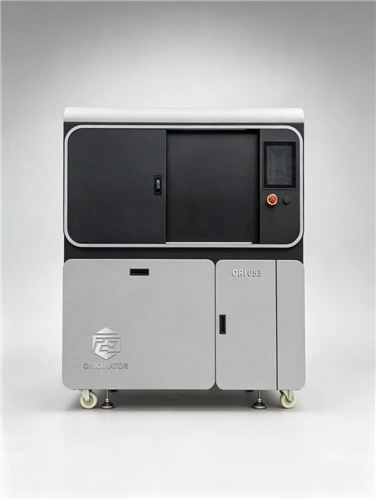
Jewelry 3D printers work by building three-dimensional entities by depositing material layer by layer based on a digital model, a technique known as "additive manufacturing." This is completely different from traditional "subtractive manufacturing" (such as carving and polishing) in jewelry making, enabling more complex and intricate designs.
The specific process is as follows:
Design Modeling: Designers use professional software (such as Rhino and 3DESIGN) to create a 3D digital model of the jewelry, precise down to every curve and detail.
Data Conversion: The 3D model is imported into slicing software, converted into printer-readable instructions (G-code), and the printing path for each layer is planned.
Layer-by-Layer Printing: In SLA/DLP technology, liquid photosensitive resin is used, cured layer by layer by ultraviolet laser or projector.
In 3D printing wax models, the printer deposits wax material or wax-containing resin layer by layer to form a high-precision wax model.
Post-processing and casting: After the printed wax model is cleaned and the support is removed, it is used for lost-wax casting. The wax model is embedded in plaster and heated to melt the wax, forming a cavity. Molten metal (such as gold or silver) is then poured in to obtain a metal jewelry blank. The finished product is then completed through grinding, polishing, setting and other processes.