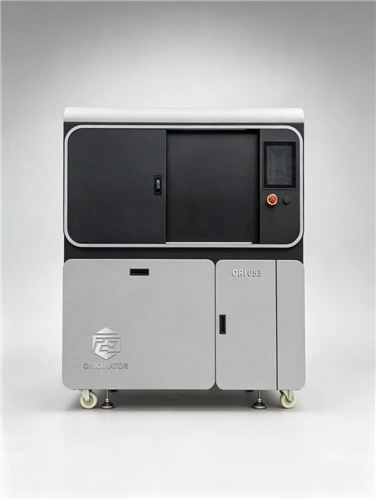
Judging the quality of a wax 3D printer requires a comprehensive evaluation of five core dimensions: printing accuracy, stability, material compatibility, surface finish, and production efficiency. This is especially important in high-precision fields such as jewelry and dentistry, where any deficiency in any of these areas can affect the quality of the final casting.
Printing Accuracy: The Key to Model Reproduction
XY Resolution: Recommended ≤50μm; high-end DLP/MSLA equipment can reach 25μm, clearly rendering details such as micro-holes and fine filigree.
Z-Axis Layer Thickness: Ideally 10–50μm; excessive thickness will result in noticeable layer textures, affecting the surface quality before polishing.
Dimensional Accuracy Error: High-quality equipment controls this within ±0.05mm, such as the 3D Systems MJP 300W Plus, which can reach ±0.0508mm (single machine).
Forming Accuracy: Some professional models, such as 3D wax pattern printers, can reach 16μm, suitable for medical and precision casting.
Mechanical Stability: The Cornerstone of Continuous Production
Frame Structure: Metal frames are superior to plastic frames, offering strong shock resistance and preventing deformation during long-term operation.
Transmission System: Ball screw drives provide greater stability and a lower failure rate, directly impacting printing continuity.
Heated Bed Leveling: Automatic leveling significantly improves first-layer adhesion and reduces failure rates.
Full-Load Testing Certification: Like Zhongcheng Smart Equipment, which has passed a 240-hour full-load test, verifying industrial-grade stability.