In 2026, the global high jewelry and precision investment casting industries are undergoing an unprecedented dual upheaval in both finance and technology. Under the combined pressure of persistently high and highly volatile precious metal prices, along with the explosive adoption of generative artificial intelligence (AI) in jewelry design, traditional manufacturing paradigms are rapidly collapsing.
To break through ever-tightening profit margins and satisfy the overseas market's extreme demand for fast-response supply chains built around speed, customization, and lightweight design, leading global OEM manufacturers and design studios are decisively abandoning traditional rubber mold wax injection and low-end photopolymer resin printing. Adopting industrial-grade MultiJet Printing (MJP) technology has evolved from a simple cost-reduction upgrade into a true demonstration of manufacturing strength-one that enables modern factories to win high-value overseas B2B contracts.

Part 1: High Gold Prices Are Forcing the Industry into a Revolution of Precision Weight Control
The persistently high international gold price in 2026 has made raw material stocking and inventory turnover a major financial burden for every jewelry manufacturer. To control end-product pricing without sacrificing visual luxury, overseas brands are aggressively pursuing designs that deliver maximum visual volume with minimum actual weight.
• The Challenge of Micron-Level Thin Walls
Modern jewelry design is increasingly dominated by hollow flowing structures, organic micro-honeycombs, and biomimetic lattice matrices. These complex geometries are engineered to reduce precious metal consumption to the greatest possible extent while preserving the visual presence and scale of the piece.
• The Limits of Traditional Wax Injection Molding
Traditional rubber mold wax injection reaches its limits when dealing with micron-scale flow channels and ultra-thin wall sections. Due to wax flow limitations and rapid cooling during injection, the scrap rate of wax patterns becomes extremely high, making mass production nearly impossible.
• Pure Wax 3D Printing as the Solution
Industrial wax 3D printing systems, powered by an ultra-fine 15-micron layer resolution, can reproduce the hollow structures and thin walls of CAD models with near-perfect fidelity. This allows manufacturers to control precious metal casting weight down to the milligram, directly helping overseas buyers save substantial costs on gold raw material procurement.
Part 2: The Explosion of AI Jewelry Design Is Forcing Manufacturing into the Era of "Zero-Labor" Post-Processing
According to the latest 2026 supply chain research, AI generative design tools have deeply penetrated independent jewelry design studios across Europe and North America. AI can generate highly complex micro-pavé prong settings, dense geometric openwork, and interwoven filigree structures in seconds. However, this design-side explosion is creating a major manual-processing disaster on the production floor.
• The Labor Black Hole of Resin Post-Processing
When traditional resin 3D printing technologies such as SLA or LCD are used, workers must manually clip away dense support structures and then sand each part by hand. For AI-generated designs containing hundreds of micro-prongs, support removal can take hours and frequently causes breakage of fragile features.
• The Chemical Synergy of MultiJet Pure Wax Printing
Industrial MJP wax printing uses a dual-material system:
Red Build Wax for highly precise formation of delicate jewelry geometries
White Support Wax for surrounding and supporting all overhangs, undercuts, and suspended structures
Once printing is complete, no manual tools are required. Operators simply place the entire tray into a controlled warm liquid bath, where the white support wax dissolves away automatically and cleanly. This enables true zero-labor, damage-free support removal, eliminating any risk of surface scratching.
Part 3: Technical Blueprint - Eliminating the "Casting Failure Tax" at the Source
In today's high-gold-price environment, every failed precious metal casting represents a serious financial loss. Many workshops attempt to reduce startup costs by adopting high-wax resin printing, only to find their profits consumed by hidden scrap rates and casting defects. A serious industry knowledge base must therefore examine the core chemical differences between these materials during burnout.

|
Key Manufacturing Indicator |
Traditional High-Wax Photopolymer Resin |
Industrial 15μm Pure Wax (MJP) |
|
Material Composition |
A mixture of plastic polymers and curing agents |
100% pure castable hydrocarbon wax |
|
Burnout / Vaporization Behavior (Ash Residue Level) |
Burns and sublimates at high temperatures; easily leaves residue in the investment mold |
Low-temperature melting and complete flow-out with clean burnout |
|
Precious Metal Casting Quality |
Prone to microporosity, carbon gas pockets, and severe surface pitting |
Absolutely zero carbon ash residue; dense and flawless precious metal crystallization |
|
Safety of the Gypsum Investment Mold System |
Resin expands dramatically when heated, often cracking fragile gypsum molds |
Pure wax liquefies and flows out when heated, generating zero internal pressure in the mold cavity |
|
Manual Post-Processing Time per Part |
30–60 minutes of manual clipping and mechanical polishing per piece |
0 minutes (fully automated batch dissolution in liquid bath) |
Part 4: Elastic Production Scaling and Total Cost of Ownership (TCO) Optimization
To maximize return on assets and long-term manufacturing efficiency, modern smart workshops typically adopt tiered digital pure-wax production configurations based on their throughput requirements and business positioning.
• Agile Custom Prototyping (Single-Printhead Architecture)
An ideal solution for high-end custom jewelry brands, independent designers, and bespoke jewelry studios. With a highly accessible initial capital investment, a single-printhead system still delivers uncompromising 15-micron detail precision, enabling workshops to convert CAD files into flawless master wax patterns overnight with minimal material waste and footprint.
• Industrial-Scale Mass Production (Triple-Printhead Architecture)
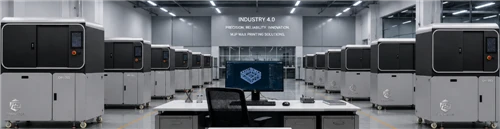
Designed specifically for high-volume OEM/ODM factories and large industrial casting facilities. A synchronized triple-printhead assembly fundamentally multiplies daily wax pattern throughput, allowing production lines to operate at high output 24/7 and easily meet the demanding delivery schedules of multinational customers.
Conclusion
The global jewelry supply chain of 2026 belongs only to digital factories with high agility and exceptional yield control. Continuing to struggle with unpredictable resin casting scrap rates or relying on inefficient manual mold-making will inevitably push manufacturers to the margins of the market.
Upgrading the workshop to an industrial 15μm pure wax MJP ecosystem is the essential path toward eliminating the "casting failure tax," protecting digital intellectual property, and securing a stable position in the high-end segment of the global luxury supply chain.
⚡ Strictly Confidential & Risk-Free Technical Validation ⚡
Protect Your Intellectual Property and Verify the Quality - Claim Your Free 15μm Pure Wax Test Sample Today
We understand the commercial value of core jewelry designs. Upload your most complex CAD file today under the protection of a strict NDA (Non-Disclosure Agreement).
Our technical team will use premium Red Build Wax and White Support Wax to print your standard wax master pattern free of charge, and ship it directly to your factory via DHL/FedEx international express.
Cast it in your own foundry and witness, with your own results, the dense crystallization and zero-ash precision quality that only true industrial pure wax technology can deliver.